Admit rate has ranged 53%–60% over the last 5 years, though the latest figure above (61%) falls outside that window. Source: IPEDS via Urban Institute.
Acceptance & SAT from Common Data Set / IPEDS; net price, earnings & graduation from the U.S. Dept. of Education College Scorecard. Figures lag ~1–2 years — verify with the school.
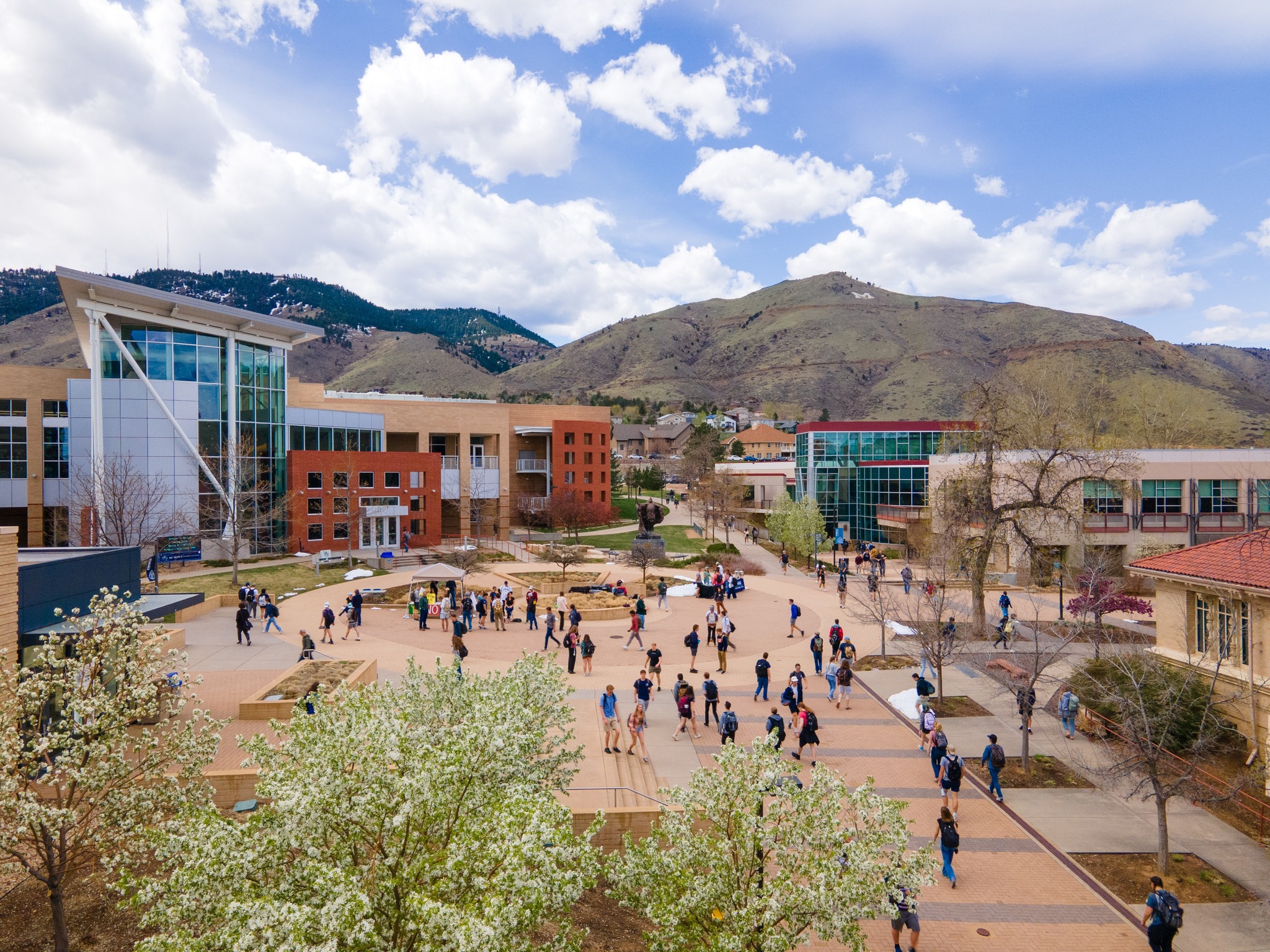
The Colorado School of Mines is a singular institution—a public polytechnic university laser-focused on earth, energy, and materials. Nestled in the foothills of Golden, it’s a place where the academic culture is famously rigorous and collaborative, defined by a hands-on, problem-solving ethos that translates directly into some of the highest early-career salaries in the nation. This isn't a liberal arts college with an engineering department; it's a boot camp for the world's resource and technology sectors, where the vibe is more Carhartt than cardigan.
Admission requirements
Test-optional — scores considered if submitted
Required
High school transcript
Grade point average
College-prep program
TOEFL (non-native English)
Considered (not required)
Class rank
Letters of recommendation
Test scores (SAT/ACT)
Source: IPEDS Admissions survey (2022) via Urban Institute. Covers formal factors only — it does not reflect essays, extracurriculars, or other holistic criteria.
More details
Undergrad enrollment
6,155
In-state tuition
$21,914
Out-of-state tuition
$45,824
No-Loan Policy
Not in sources
Graduation Rate
82%
Meets Full Need
Not in sources
ED Share of Class
Not in sources
First-Year Retention
Not in sources
Demonstrated Interest
Not considered
Median Earnings (10yr)
$97,335
Outcomes & value
Outcomes & value
Median earnings (10 yr)
$97,335
Value (earnings ÷ net price)
3.4×
Median debt at graduation
$23,000
Graduation rate
82%
First-year retention
93%
Reducing loan balance (3 yr)
91%
Pell (lower-income) share
14%
First-gen share (among federal-aid recipients)
15%
Top-earning majors
Median earnings by field of study (highest credential), ~2 years after completion.
Computer Science$78,971
Mining and Mineral Engineering$77,715
Petroleum Engineering$77,213
Mathematics$71,854
Electrical, Electronics, and Communications Engineering$70,886
Metallurgical Engineering$67,420
Applicants here also applied to
The schools that most often appear alongside Colorado School of Mines on applicants’ lists, from our self-reported outcomes corpus.
On-campus criminal offenses classed as violent (murder/non-negligent manslaughter, rape, robbery, aggravated assault) for the most recent reported year. Source: U.S. Dept. of Education Campus Safety and Security (Clery Act). Counts reflect what’s reported to the school, and urban campuses often report more partly due to non-student incidents nearby — read alongside campus size and setting, not as a standalone safety verdict.
Climate
Pleasant days / yr
85
Summer high
83°F
Winter low
18°F
Annual rain
18.8"
Annual snow
55.8"
Natural-hazard risk
Relatively High
Pleasant days counts days per year with a mean temperature of 55–75°F, a high at or below 90°F, a low at or above 45°F, and little precipitation — a transparent comfort measure, not a weighting we invented. Computed from Open-Meteo ERA5 daily history (2019–2023). Natural-hazard risk is the county’s composite rating from the FEMA National Risk Index.
Deep dive — research, future-scholar output & economic mobility▾
Research output
Institutional h-index
419
Scholarly works
36,964
Institutional research volume and impact from OpenAlex. The h-index reflects large research universities and will be low for teaching-focused liberal-arts colleges — not a measure of undergraduate quality.
Future-scholar output
Science & engineering PhDsper-capita yield 6.8
Share of this school’s graduates who go on to earn research doctorates (2010–20), by national rank and per-capita yield (NSF institutional-yield ratio). A signal of a research-oriented student culture — not a causal promise, since it partly reflects who enrolls. Only top producers appear. Source: NSF NCSES, Baccalaureate Origins of U.S. Research Doctorate Recipients.
Economic mobility
Mobility rate
2.5%
Bottom → top quintile
Quick answers
What is the acceptance rate at Colorado School of Mines?
Colorado School of Mines's acceptance rate is approximately 61% (Golden, CO), based on the most recent figures we compiled from public and primary sources.
What SAT score do you need for Colorado School of Mines?
Admitted students at Colorado School of Mines typically score 1320–1480 on the SAT (the middle-50% range). Scores outside this band are still admitted, especially with strong applications.
How much does Colorado School of Mines cost?
At Colorado School of Mines, the average net price (after aid) is about $28,690 per year. Actual cost varies with financial aid and residency.
How many undergraduates attend Colorado School of Mines?
Colorado School of Mines enrolls approximately 6,155 undergraduate students.
Where is Colorado School of Mines located?
Colorado School of Mines is located in Golden, CO.
Admissions
Mines has become notably more accessible in recent years, with its rising significantly. While historically more selective, the current process evaluates a strong academic core above all else. The university is , allowing applicants to decide whether to submit SAT or ACT scores.
The admitted student profile is academically formidable. The average unweighted GPA is 3.84. For those who submit test scores, the average SAT composite is 1372 and the average ACT composite is 31. Academic factors—specifically the rigor of secondary school record, class rank, GPA, and standardized test scores (if submitted)—are rated as "very important" in the admissions decision. Notably, demonstrated interest is "not considered," meaning campus visits, interviews, and communication with the admissions office are not factored into the evaluation. The rate—the percentage of admitted students who choose to enroll—is approximately 23%.
Earnings = median of students working ~10 years after entry; debt = median of graduates. Value divides 10-yr earnings by one year’s net price — read it as earnings per dollar of annual cost, not a full lifetime ROI; it favors lower-cost schools. Source: U.S. Dept. of Education College Scorecard. Figures lag ~2 years and reflect all students, not your intended major.
Biomedical/Medical Engineering
$66,541
Engineering, General$65,131
Source: U.S. Dept. of Education College Scorecard (field-of-study earnings). Figures cover graduates who received federal aid and lag ~2 years; not all programs report data.
Co-application frequency from self-reported results — directional peer discovery, not a recommendation.
64%
From bottom quintile
4%
Mobility rate = the share of students who both start in the bottom household-income quintile and reach the top quintile; bottom → top is that chance conditional on starting at the bottom. Source: Opportunity Insights Mobility Report Cards (Chetty, Friedman, Saez, Turner & Yagan). Reflects 1980–82 birth cohorts, so it’s directional, not current.
The curriculum at Mines is unapologetically specialized, with an overwhelming focus on engineering, applied science, and related quantitative fields. The academic environment is described as rigorous and immersive, emphasizing hands-on learning and the application of theory to real-world challenges. This practical, entrepreneurial focus is central to the institution's advertised "Mines Advantage."
Popular and Strongest Programs: The most popular majors are overwhelmingly in engineering. Mechanical Engineering is the single largest degree program, with around 301 degrees granted annually. However, the institution's historic and enduring strengths lie in the earth sciences and resource engineering. As noted by the campus community, geological engineering, mining engineering, and petroleum engineering are consistently cited as top-notch programs with excellent faculty and peers.
Program Breadth: While dominated by engineering, majors also include Computer and Information Sciences, Engineering Physics, and various applied sciences. The undergraduate programs are built around renowned faculty and hands-on research opportunities from the start.
Life at Mines is defined by a intense, collaborative academic culture set against the backdrop of the Rocky Mountains. The student body is often described as friendly and supportive, with a strong network in place to help peers succeed through the demanding coursework. The social scene is less defined by Greek life or massive parties and more by shared academic struggle, outdoor recreation, and campus traditions.
Housing: A significant portion of the student body lives off-campus. Only 37% of students live in college-owned, -operated, or -affiliated housing, while 63% live off campus.
Campus Vibe: First-hand accounts describe a campus where students are largely focused on their work but find community through shared interests, clubs, and the stunning Colorado environment. The culture is encouraging, though intensely academic.
Global Community: The campus hosts a diverse international community, with students from over 60 countries attracted by the research facilities, faculty, and culture.
This is where the Mines investment pays off spectacularly. Graduates enter the workforce with exceptional career prospects and commanding salaries.
Placement Success: Career outcomes are overwhelmingly positive. A remarkable 95% of recent alumni had positive outcomes (employment, graduate school, etc.) shortly after graduation.
Earning Power: The median salary for graduates six years after entry is exceptionally high. While sources cite figures like $82,950 and $100,252, the canonical median earnings figure 10 years after entry is $97,335.
Graduation Rate: Mines retains and graduates its students at a high rate. The six-year graduation rate is 82%, placing the institution in the top tier nationally for completion.
Mines is a public institution with a that reflects its high-return value proposition. Financial aid is widely available, with a significant majority of students receiving assistance.
Average Net Price: The average net price after aid and scholarships is $28,690.
Aid Prevalence: A very high percentage—97%—of undergraduate students receive some form of financial aid. The average aid package is $20,443. Notably, 42.3% of students receive scholarships and grants that bring the average cost down to $29,425.
State Aid Program: Colorado offers a significant promise program. Beginning in Fall 2024, the Colorado Promise guarantees that students attending public institutions (like Mines) with family incomes of $90,000 or less will have their tuition and fees completely covered by state and institutional aid.
Pell Grants: 13% of undergraduates benefit from federal Pell grants for demonstrated financial need.
Policies: The university recommends all incoming students complete the FAFSA. The financial aid office provides a net price calculator for families to estimate costs. The sources do not indicate that Mines has a universal "no-loan" policy or that it meets 100% of demonstrated financial need for all admitted students outside of the state Colorado Promise program.
Mines stands out for its pure, undiluted focus. It is not trying to be everything to everyone. It is a mission-driven public polytechnic dedicated to solving the world's resource, energy, and infrastructure challenges. This clarity of purpose creates a unique culture: intensely collaborative rather than cutthroat, practical rather than theoretical, and directly tied to industry. The "Mines Advantage" isn't marketing fluff—it's the tangible result of a curriculum built on hands-on problem-solving, which in turn generates near-perfect job placement and some of the highest early-career salaries of any public university in the country. You come here to work hard on specific, applied problems, surrounded by peers and faculty who speak the same technical language, and you graduate with a ticket to the upper echelons of the engineering and resource sectors. For a certain type of student—one driven by building, solving, and quantifying—there is simply no comparable undergraduate experience.
Colorado School of Mines seal · sourceColorado School of Mines | A Premier Engineering University · sourceColorado School of Mines (@ColoradoSchoolofMines) • Facebook · sourceColorado School of Mines - Profile, Rankings and Data | US News Best Colleges · source