Admit rate has ranged 40%–50% over the last 5 years — notably volatile. Source: IPEDS via Urban Institute.
Acceptance & SAT from Common Data Set / IPEDS; net price, earnings & graduation from the U.S. Dept. of Education College Scorecard. Figures lag ~1–2 years — verify with the school.
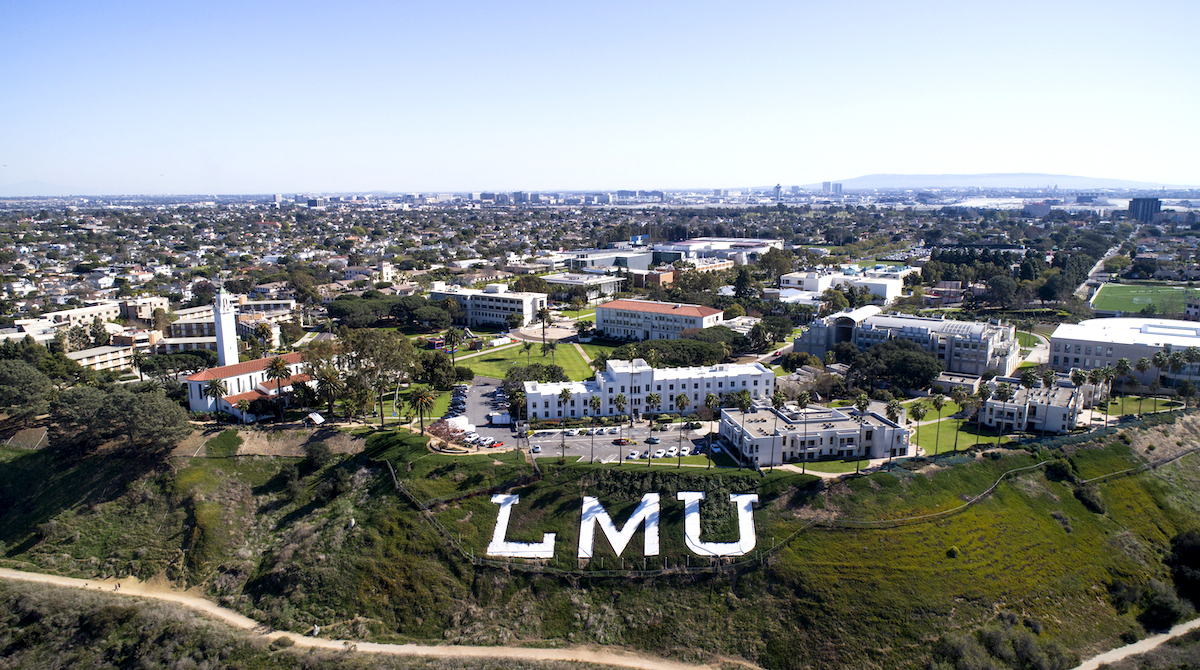
Loyola Marymount University is a selective, private Jesuit institution perched on a bluff in Westchester, Los Angeles, offering students a rigorous liberal arts education with a distinctly Californian, industry-focused twist. Its campus life is a vibrant, club-heavy scene set against a backdrop of palm trees and ocean views, attracting a student body known for both its academic drive and its affluent, socially active profile. The university leverages its prime LA location to create powerful pipelines into entertainment, business, and tech, producing graduates with strong early-career earning potential.
Admission requirements
Test-optional — scores considered if submitted
Required
High school transcript
Grade point average
Letters of recommendation
College-prep program
TOEFL (non-native English)
Considered (not required)
Class rank
Test scores (SAT/ACT)
Source: IPEDS Admissions survey (2022) via Urban Institute. Covers formal factors only — it does not reflect essays, extracurriculars, or other holistic criteria.
More details
Undergrad enrollment
7,094
In-state tuition
$62,357
Out-of-state tuition
$62,357
No-Loan Policy
No
Popular Majors
Business, Visual & Performing Arts
Meets Full Need
No
Demonstrated Interest
Considered
Median Earnings (10yr)
$78,349
Six-Year Graduation Rate
80%
Four-Year Graduation Rate
68%
First-Year On-Campus Living
91%
First-Year Class Gender Split
Outcomes & value
Outcomes & value
Median earnings (10 yr)
$78,349
Value (earnings ÷ net price)
1.6×
Median debt at graduation
$19,500
Graduation rate
79%
First-year retention
89%
Reducing loan balance (3 yr)
78%
Pell (lower-income) share
13%
First-gen share (among federal-aid recipients)
22%
Financial health
3.0 / 3.0Meets the federal financial-responsibility standard
U.S. Dept. of Education Financial Responsibility Composite Score (FY2022-23). Scale −1.0 to 3.0; ≥1.5 meets the standard. Reported for private nonprofit & for-profit institutions only — public universities are state-backed and not scored, so this is a stability signal, not a ranking.
Top-earning majors
Median earnings by field of study (highest credential), ~2 years after completion.
Computer and Information Sciences, General$72,796
Civil Engineering$67,995
Accounting and Related Services$67,240
Finance and Financial Management Services$60,358
Mechanical Engineering$57,318
Marketing$50,802
Applicants here also applied to
The schools that most often appear alongside Loyola Marymount University on applicants’ lists, from our self-reported outcomes corpus.
On-campus criminal offenses classed as violent (murder/non-negligent manslaughter, rape, robbery, aggravated assault) for the most recent reported year. Source: U.S. Dept. of Education Campus Safety and Security (Clery Act). Counts reflect what’s reported to the school, and urban campuses often report more partly due to non-student incidents nearby — read alongside campus size and setting, not as a standalone safety verdict.
Climate
Pleasant days / yr
263
Summer high
75°F
Winter low
46°F
Annual rain
17.5"
Natural-hazard risk
Very High
Pleasant days counts days per year with a mean temperature of 55–75°F, a high at or below 90°F, a low at or above 45°F, and little precipitation — a transparent comfort measure, not a weighting we invented. Computed from Open-Meteo ERA5 daily history (2019–2023). Natural-hazard risk is the county’s composite rating from the FEMA National Risk Index.
Deep dive — research, future-scholar output & economic mobility▾
Research output
Institutional h-index
202
Scholarly works
10,975
Institutional research volume and impact from OpenAlex. The h-index reflects large research universities and will be low for teaching-focused liberal-arts colleges — not a measure of undergraduate quality.
Economic mobility
Mobility rate
2.5%
Bottom → top quintile
46%
From bottom quintile
5%
Mobility rate = the share of students who both start in the bottom household-income quintile and reach the top quintile; bottom → top is that chance conditional on starting at the bottom. Source: Opportunity Insights Mobility Report Cards (Chetty, Friedman, Saez, Turner & Yagan). Reflects 1980–82 birth cohorts, so it’s directional, not current.
Quick answers
What is the acceptance rate at Loyola Marymount University?
Loyola Marymount University's acceptance rate is approximately 45% (Los Angeles, CA), based on the most recent figures we compiled from public and primary sources.
What SAT score do you need for Loyola Marymount University?
Admitted students at Loyola Marymount University typically score 1260–1430 on the SAT (the middle-50% range). Scores outside this band are still admitted, especially with strong applications.
How much does Loyola Marymount University cost?
At Loyola Marymount University, the average net price (after aid) is about $48,381 per year. Actual cost varies with financial aid and residency.
How many undergraduates attend Loyola Marymount University?
Loyola Marymount University enrolls approximately 7,094 undergraduate students.
Where is Loyola Marymount University located?
Loyola Marymount University is located in Los Angeles, CA.
Admissions
Loyola Marymount University operates a selective admissions process with a clear advantage for those who apply through its binding Early Decision program. While the overall sits at 45%, the early acceptance rate is notably higher, reported at 55.2% by U.S. News. The university offers both Early Decision I and II options, which are binding agreements for admitted students. For the most recent class, the average high school GPA of admitted first-years was a 4.0, indicating a highly competitive academic pool. The middle 50% SAT range for admitted students is 1260–1430. Demonstrated interest is a factor considered in the admissions process, as indicated by its inclusion in the (Section C7). The first-year class is 45% male and 55% female, and 91% of first-year students live on campus.
Earnings = median of students working ~10 years after entry; debt = median of graduates. Value divides 10-yr earnings by one year’s net price — read it as earnings per dollar of annual cost, not a full lifetime ROI; it favors lower-cost schools. Source: U.S. Dept. of Education College Scorecard. Figures lag ~2 years and reflect all students, not your intended major.
Economics
$47,260
Liberal Arts and Sciences, General Studies and Humanities$42,235
Source: U.S. Dept. of Education College Scorecard (field-of-study earnings). Figures cover graduates who received federal aid and lag ~2 years; not all programs report data.
Co-application frequency from self-reported results — directional peer discovery, not a recommendation.
Academics
LMU offers a comprehensive undergraduate education grounded in the Jesuit tradition, with over 50 majors and more than 150 degrees, certificates, and credentials. The curriculum is designed to be rigorous and prepare students for "lives of meaning and purpose." The most popular majors cluster in Business, Management, Marketing, and Related Support Services, as well as Visual and Performing Arts. The university is particularly noted for its School of Film and Television, which benefits from its Los Angeles location. Reviews often highlight supportive faculty who encourage personal and academic growth, and the academic environment is described as fostering inclusivity. The university emphasizes a blend of liberal arts, STEM, and professional studies, aiming to make a "mark in education, technology, entertainment, and beyond."
Life at LMU is defined by an active, engaged campus culture set on a famously beautiful campus in Westchester, Los Angeles. The university boasts over 200 student clubs and organizations, a vibrant arts scene, and a strong emphasis on community. While Greek life is active with fraternities and sororities, they do not have traditional off-campus houses. The student body has been characterized in student discussions as including "very rich kids," contributing to a particular social atmosphere. The campus itself is noted for its lush greenery and color, providing an environment where students can "focus deeply on academics." There are frequent events, sports, and a gym available, fostering a lively and interconnected community. The university's mission, grounded in a 500-year Ignatian tradition, encourages students to "act with courage and compassion."
LMU graduates enter the workforce with strong prospects, particularly in the early stages of their careers. According to the university's own outcomes survey of the Class of 2025 (with data collected from 79% of the class), 73% were working, 24% were in graduate school, 2% were seeking employment, and 1% were engaged in service within six months of graduation. The reported early career salary for recent graduates is $77,000. The four-year graduation rate is 68%, and the six-year graduation rate is reported as 80%, which places it in the top 15% nationally. The university also reports a 95% student-athlete Graduation Success Rate. Alumni median earnings six years after graduation are reported as $62,763.
Attending LMU represents a significant financial investment, with a total undergraduate exceeding $99,000. The university provides financial aid through a combination of scholarships, grants, loans, and work programs. The average aid package awarded is $41,796, with the average need-based scholarship or grant award being $30,743. It is important to note that LMU states it "is not able to meet 100% of every student's financial need." The university does not advertise a "no-loan" policy; instead, financial aid offers typically include federal, state, and institutional aid, which may encompass loans. Merit-based scholarships and need-based grants, which do not need to be repaid, are automatically accepted on the financial aid offer. Students are encouraged to use the university's Calculator for a personalized estimate.
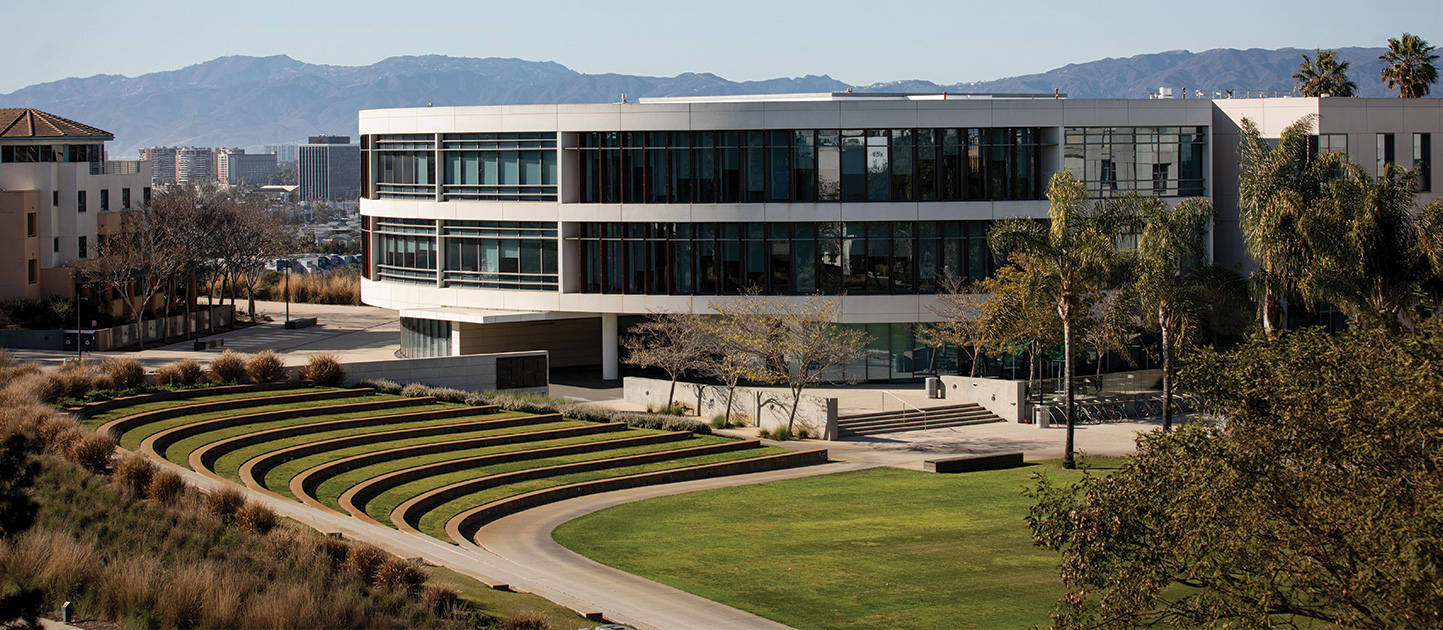
LMU's distinct identity is forged at the intersection of a traditional Jesuit liberal arts education and the dynamic, industry-driven culture of Los Angeles. It's not just a university in LA; it's a university that uses LA as its classroom, particularly for students in film, television, business, and technology. This creates a unique student profile: intellectually serious but also socially savvy, drawn by both the rigorous academics and the enviable lifestyle. The campus itself—a stunning, garden-like bluff overlooking the city and the Pacific—fosters a tight-knit residential community that contrasts with the sprawling metropolis below. While the cost is high and the student body leans affluent, the return is a powerful network and career trajectory rooted in one of the world's most influential cities. It's for the student who wants the community of a classic liberal arts college but demands the professional opportunities and cultural energy of a global capital.
Loyola Marymount University seal · sourceVisit - Loyola Marymount University · sourceLoyola Marymount University · sourceGetting To Know: Loyola Marymount University (CA) - Educated Quest · source