Admit rate has ranged 56%–85% over the last 5 years — notably volatile. Source: IPEDS via Urban Institute.
Acceptance & SAT from Common Data Set / IPEDS; net price, earnings & graduation from the U.S. Dept. of Education College Scorecard. Figures lag ~1–2 years — verify with the school.
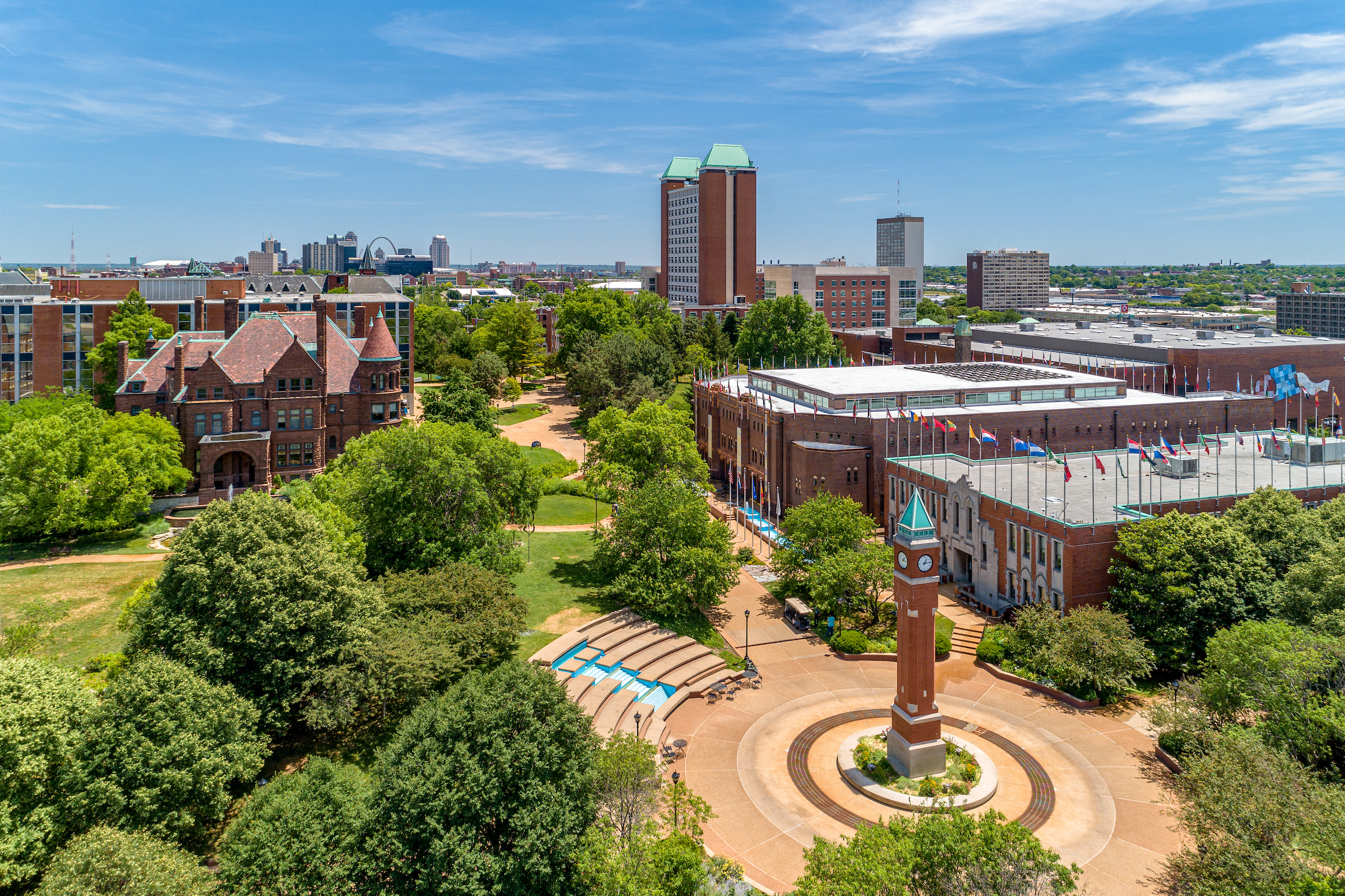
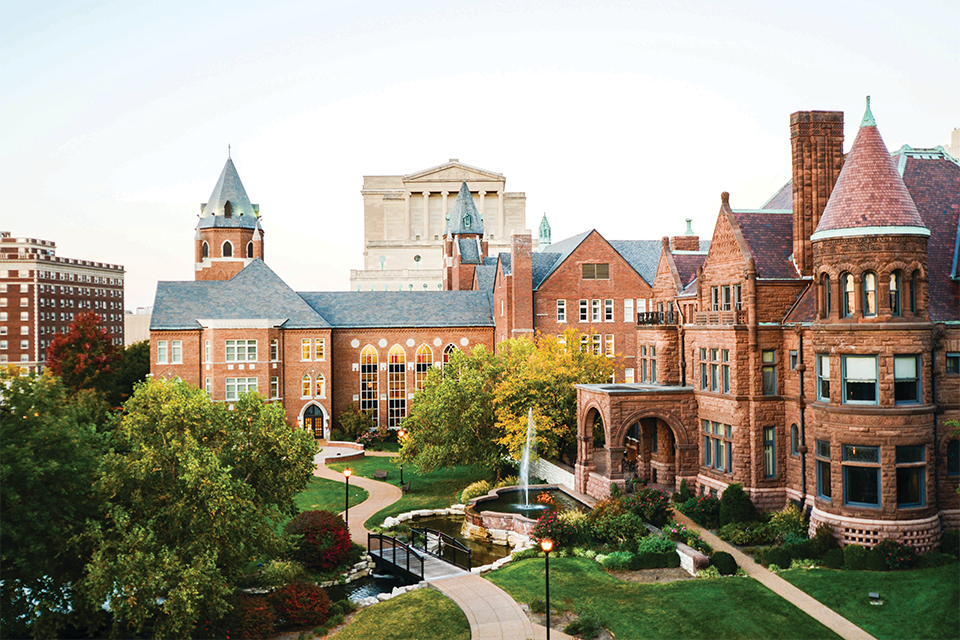
Saint Louis University (SLU) is a mid-sized Jesuit university in St. Louis, Missouri, known for its strong pre-med and STEM programs, intimate 9:1 student-faculty ratio, and urban campus with a tight-knit community vibe. With a 75% acceptance rate and an average SAT range of 1130–1340, SLU attracts academically solid students who value its Jesuit emphasis on service and ethical leadership. The school shines in health sciences (its medical school is the oldest west of the Mississippi) and offers a lively campus life with 200+ student organizations.
Admission requirements
Test-optional — scores considered if submitted
Required
High school transcript
Grade point average
Demonstrated competencies
TOEFL (non-native English)
Considered (not required)
Letters of recommendation
Test scores (SAT/ACT)
College-prep program
Source: IPEDS Admissions survey (2022) via Urban Institute. Covers formal factors only — it does not reflect essays, extracurriculars, or other holistic criteria.
More details
Undergrad enrollment
7,267
In-state tuition
$55,760
Out-of-state tuition
$55,760
Campus Housing
52% live on-campus
Student-Faculty Ratio
9:1
6-Year Graduation Rate
72-80%
Freshman Retention Rate
88%
Median Earnings (1yr post-grad)
$36,427
Outcomes & value
Outcomes & value
Median earnings (10 yr)
$70,783
Value (earnings ÷ net price)
2.9×
Median debt at graduation
$25,000
Graduation rate
80%
First-year retention
88%
Reducing loan balance (3 yr)
73%
Pell (lower-income) share
17%
First-gen share (among federal-aid recipients)
22%
Financial health
3.0 / 3.0Meets the federal financial-responsibility standard
U.S. Dept. of Education Financial Responsibility Composite Score (FY2022-23). Scale −1.0 to 3.0; ≥1.5 meets the standard. Reported for private nonprofit & for-profit institutions only — public universities are state-backed and not scored, so this is a stability signal, not a ranking.
Top-earning majors
Median earnings by field of study (highest credential), ~2 years after completion.
Electrical, Electronics, and Communications Engineering$73,446
Mechanical Engineering$67,660
Aerospace, Aeronautical, and Astronautical/Space Engineering$66,941
Computer and Information Sciences, General$64,990
Registered Nursing, Nursing Administration, Nursing Research and Clinical Nursing$59,004
Clinical/Medical Laboratory Science/Research and Allied Professions
Applicants here also applied to
The schools that most often appear alongside Saint Louis University on applicants’ lists, from our self-reported outcomes corpus.
On-campus criminal offenses classed as violent (murder/non-negligent manslaughter, rape, robbery, aggravated assault) for the most recent reported year. Source: U.S. Dept. of Education Campus Safety and Security (Clery Act). Counts reflect what’s reported to the school, and urban campuses often report more partly due to non-student incidents nearby — read alongside campus size and setting, not as a standalone safety verdict.
Climate
Pleasant days / yr
76
Summer high
86°F
Winter low
27°F
Annual rain
55.7"
Annual snow
13.8"
Natural-hazard risk
Relatively High
Pleasant days counts days per year with a mean temperature of 55–75°F, a high at or below 90°F, a low at or above 45°F, and little precipitation — a transparent comfort measure, not a weighting we invented. Computed from Open-Meteo ERA5 daily history (2019–2023). Natural-hazard risk is the county’s composite rating from the FEMA National Risk Index.
Deep dive — research, future-scholar output & economic mobility▾
Research output
Institutional h-index
534
Scholarly works
49,569
Institutional research volume and impact from OpenAlex. The h-index reflects large research universities and will be low for teaching-focused liberal-arts colleges — not a measure of undergraduate quality.
Economic mobility
Mobility rate
1.3%
Bottom → top quintile
42%
From bottom quintile
3%
Mobility rate = the share of students who both start in the bottom household-income quintile and reach the top quintile; bottom → top is that chance conditional on starting at the bottom. Source: Opportunity Insights Mobility Report Cards (Chetty, Friedman, Saez, Turner & Yagan). Reflects 1980–82 birth cohorts, so it’s directional, not current.
Quick answers
What is the acceptance rate at Saint Louis University?
Saint Louis University's acceptance rate is approximately 75% (Saint Louis, MO), based on the most recent figures we compiled from public and primary sources.
What SAT score do you need for Saint Louis University?
Admitted students at Saint Louis University typically score 1200–1410 on the SAT (the middle-50% range). Scores outside this band are still admitted, especially with strong applications.
How much does Saint Louis University cost?
At Saint Louis University, the average net price (after aid) is about $24,398 per year. Actual cost varies with financial aid and residency.
How many undergraduates attend Saint Louis University?
Saint Louis University enrolls approximately 7,267 undergraduate students.
Where is Saint Louis University located?
Saint Louis University is located in Saint Louis, MO.
Admissions
SLU is moderately selective, with a 75% acceptance rate (sources vary slightly, with some reporting 58-75%). The middle 50% of admitted students score between 1130-1340 on the SAT or 23-31 on the ACT, with 69% of enrollees holding a GPA of 3.75+. since at least 2021, the university emphasizes , evaluating extracurricular involvement and essays alongside academics. The application portal is via [slu.edu/apply](https://slu.edu/apply), with no mention of ED/EDII restrictions.
SLU’s 9:1 student-faculty ratio and 88% freshman retention rate reflect its focus on undergraduate attention. The Jesuit mission permeates the curriculum, requiring courses in theology and ethics. Standout programs include:
Earnings = median of students working ~10 years after entry; debt = median of graduates. Value divides 10-yr earnings by one year’s net price — read it as earnings per dollar of annual cost, not a full lifetime ROI; it favors lower-cost schools. Source: U.S. Dept. of Education College Scorecard. Figures lag ~2 years and reflect all students, not your intended major.
$55,512
Allied Health Diagnostic, Intervention, and Treatment Professions$53,608
Business Administration, Management and Operations$48,156
Source: U.S. Dept. of Education College Scorecard (field-of-study earnings). Figures cover graduates who received federal aid and lag ~2 years; not all programs report data.
Co-application frequency from self-reported results — directional peer discovery, not a recommendation.
Health sciences: SLU’s medical school (founded 1836) anchors a robust pipeline for pre-med students, with strong nursing, public health, and biomedical programs.
STEM: Reddit threads praise SLU’s STEM faculty and research opportunities, particularly in biology and engineering.
Business: The Richard A. Chaifetz School of Business integrates entrepreneurship with social impact.
Students describe a collaborative (not cutthroat) culture, with professors who are "academically competent and ethically focused" (per SLU’s academic page).
SLU’s sticker price is ~$50K/year, but 64% of students receive aid, reducing the average net cost to $30,911. Merit scholarships (e.g., the King Scholarship, $3K+/year) reward GPA and leadership. The calculator ([slu.studentaidcalculator.com](https://slu.studentaidcalculator.com/)) helps estimate aid, though packages often include loans.
SLU merges Jesuit values with urban opportunities, offering: 1. Health sciences edge: Rare undergraduate access to a top-tier medical school and affiliated hospitals. 2. Global focus: Campus ministries and study abroad programs (e.g., Madrid campus) emphasize "men and women for others." 3. St. Louis synergy: Partnerships with Cortex tech hub and nonprofits provide internships and service learning.
Downsides? Some students cite limited name recognition outside the Midwest and patchy neighborhood safety. But for those seeking a mid-sized, mission-driven university with strong pre-professional roots, SLU delivers.
Saint Louis University logo · sourceSaint Louis University's St. Louis Campus : SLU - Saint Louis University · sourceSaint Louis University's St. Louis Campus : SLU - Saint Louis University · sourceSaint Louis University - Profile, Rankings and Data | US News Best Colleges · source