Admit rate has ranged 47%–65% over the last 5 years — notably volatile, though the latest figure above (66%) falls outside that window. Source: IPEDS via Urban Institute.
Acceptance & SAT from Common Data Set / IPEDS; net price, earnings & graduation from the U.S. Dept. of Education College Scorecard. Figures lag ~1–2 years — verify with the school.
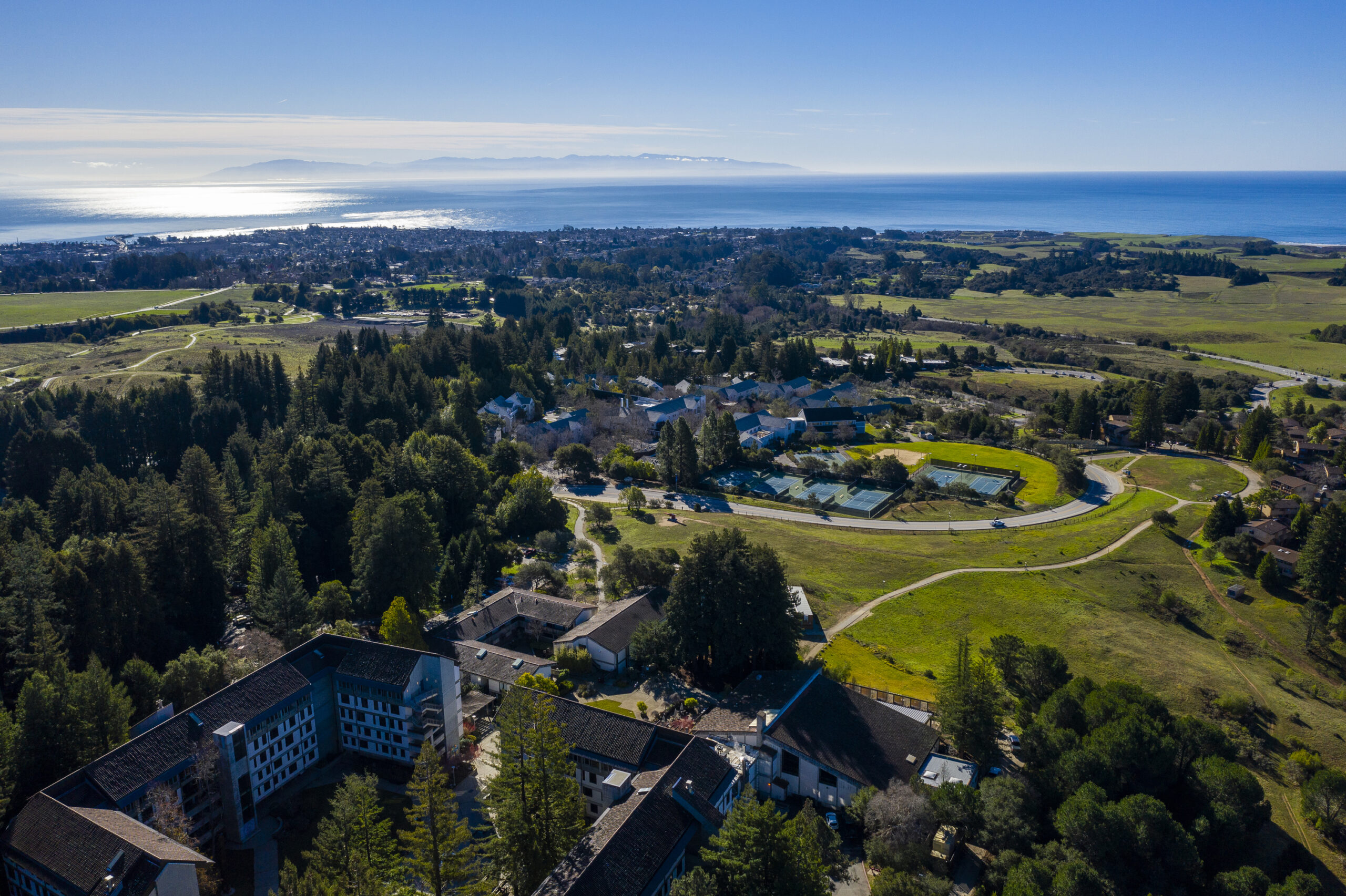
UC Santa Cruz is the University of California system's most distinctive campus, a place where redwood forests meet radical inquiry. Founded as a counterculture experiment with a residential college system, it has matured into a powerhouse for interdisciplinary, hands-on learning, particularly in computer science, marine biology, and environmental studies. The vibe is fiercely independent, socially conscious, and decidedly unpretentious—a university for students who'd rather build a robot, save a watershed, or deconstruct a paradigm than chase a traditional college 'scene.'
Admission requirements
Test-blind — scores not considered
Required
High school transcript
Grade point average
College-prep program
TOEFL (non-native English)
Source: IPEDS Admissions survey (2022) via Urban Institute. Covers formal factors only — it does not reflect essays, extracurriculars, or other holistic criteria.
More details
Undergrad enrollment
17,940
In-state tuition
$16,005
Out-of-state tuition
$50,205
No-Loan Policy
No
Graduation Rate
75%
Meets Full Need
No
ED Share of Class
N/A (No Early Decision)
Application Deadline
November 30
First-Year Retention
88%
Demonstrated Interest
Not considered
Median Earnings (10yr)
$68,396
Outcomes & value
Outcomes & value
Median earnings (10 yr)
$68,396
Value (earnings ÷ net price)
3.8×
Median debt at graduation
$16,666
Graduation rate
75%
First-year retention
88%
Reducing loan balance (3 yr)
75%
Pell (lower-income) share
32%
First-gen share (among federal-aid recipients)
37%
Top-earning majors
Median earnings by field of study (highest credential), ~2 years after completion.
Computer Engineering$79,150
Electrical, Electronics, and Communications Engineering$69,338
Computer Science$63,530
Computer/Information Technology Administration and Management$60,185
Business/Managerial Economics$51,607
Biomedical/Medical Engineering
Applicants here also applied to
The schools that most often appear alongside UC Santa Cruz on applicants’ lists, from our self-reported outcomes corpus.
On-campus criminal offenses classed as violent (murder/non-negligent manslaughter, rape, robbery, aggravated assault) for the most recent reported year. Source: U.S. Dept. of Education Campus Safety and Security (Clery Act). Counts reflect what’s reported to the school, and urban campuses often report more partly due to non-student incidents nearby — read alongside campus size and setting, not as a standalone safety verdict.
Climate
Pleasant days / yr
192
Summer high
74°F
Winter low
44°F
Annual rain
34.9"
Natural-hazard risk
Relatively High
Pleasant days counts days per year with a mean temperature of 55–75°F, a high at or below 90°F, a low at or above 45°F, and little precipitation — a transparent comfort measure, not a weighting we invented. Computed from Open-Meteo ERA5 daily history (2019–2023). Natural-hazard risk is the county’s composite rating from the FEMA National Risk Index.
Deep dive — research, future-scholar output & economic mobility▾
Research output
Institutional h-index
1,091
Scholarly works
76,526
Institutional research volume and impact from OpenAlex. The h-index reflects large research universities and will be low for teaching-focused liberal-arts colleges — not a measure of undergraduate quality.
Future-scholar output
Science & engineering PhDstop 46 nationally
Humanities & social-science PhDstop 49 nationally
Share of this school’s graduates who go on to earn research doctorates (2010–20), by national rank and per-capita yield (NSF institutional-yield ratio). A signal of a research-oriented student culture — not a causal promise, since it partly reflects who enrolls. Only top producers appear. Source: NSF NCSES, Baccalaureate Origins of U.S. Research Doctorate Recipients.
Economic mobility
Mobility rate
Quick answers
What is the acceptance rate at University of California-Santa Cruz?
University of California-Santa Cruz's acceptance rate is approximately 66% (Santa Cruz, CA), based on the most recent figures we compiled from public and primary sources.
How much does University of California-Santa Cruz cost?
At University of California-Santa Cruz, the average net price (after aid) is about $17,890 per year. Actual cost varies with financial aid and residency.
How many undergraduates attend University of California-Santa Cruz?
University of California-Santa Cruz enrolls approximately 17,940 undergraduate students.
Where is University of California-Santa Cruz located?
University of California-Santa Cruz is located in Santa Cruz, CA.
Admissions
UC Santa Cruz operates on the standard University of California application timeline, with no early action or early decision programs—all applicants apply by November 30 for the following fall. The admissions process is holistic and test-blind; SAT and ACT scores are not considered. The most important academic factor is the applicant's high school GPA, with the middle 50% of enrolled freshmen boasting a GPA between 3.76 and 4.16. According to the , the university does not consider demonstrated interest as a factor in admissions decisions. The rate—the percentage of admitted students who enroll—is notably low, reported at 9.3% for a recent cycle, reflecting the competitive landscape where admitted students often have multiple UC options. For Fall 2023, the campus received 79,048 first-year applications and admitted 64,867, resulting in an overall admit rate of 82.1%.
Earnings = median of students working ~10 years after entry; debt = median of graduates. Value divides 10-yr earnings by one year’s net price — read it as earnings per dollar of annual cost, not a full lifetime ROI; it favors lower-cost schools. Source: U.S. Dept. of Education College Scorecard. Figures lag ~2 years and reflect all students, not your intended major.
$48,823
Multi/Interdisciplinary Studies, Other$47,260
Economics$44,356
Source: U.S. Dept. of Education College Scorecard (field-of-study earnings). Figures cover graduates who received federal aid and lag ~2 years; not all programs report data.
Co-application frequency from self-reported results — directional peer discovery, not a recommendation.
2.8%
Bottom → top quintile
38%
From bottom quintile
7%
Mobility rate = the share of students who both start in the bottom household-income quintile and reach the top quintile; bottom → top is that chance conditional on starting at the bottom. Source: Opportunity Insights Mobility Report Cards (Chetty, Friedman, Saez, Turner & Yagan). Reflects 1980–82 birth cohorts, so it’s directional, not current.
UC Santa Cruz's academic identity is built on innovation, interdisciplinarity, and inclusion. The curriculum encourages collaboration and the creation of new knowledge over passive learning. The university is organized around ten distinctive residential colleges, each with its own thematic focus and community, though students take courses across the entire campus.
Its strengths are pronounced in STEM and the social sciences. The most popular majors reflect this: for the 2024 graduating class, Computer Science was the top major (13%), followed by Psychology (10%), Business/Managerial Economics (6%), and Cell/Cellular and Molecular Biology (4%). The campus is particularly well-known for its programs in computer science (especially game design and computer engineering), marine biology (leveraging its proximity to the Monterey Bay National Marine Sanctuary), astrophysics (home to renowned observatories and research centers), psychology, and environmental studies. This is a place where theoretical work is consistently tied to practical, often field-based, application.
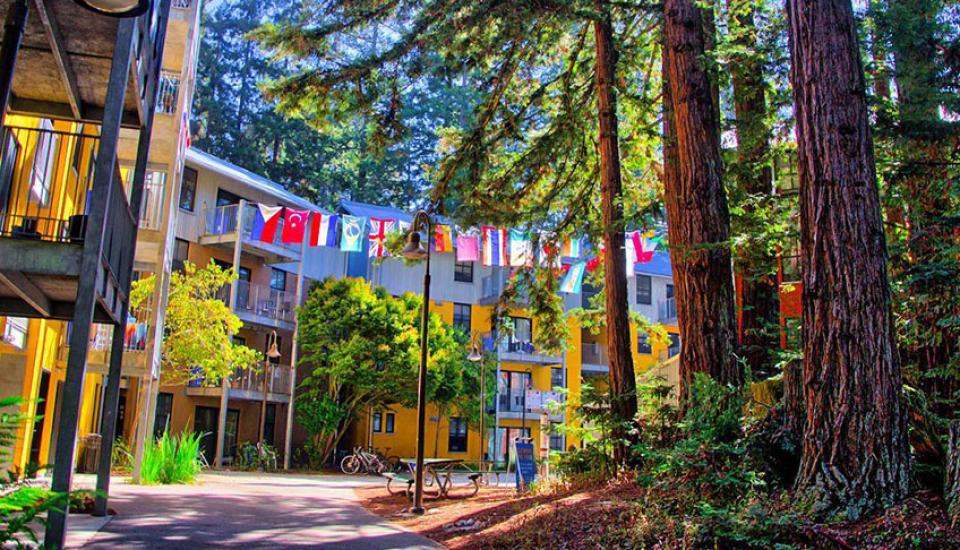
Life at UCSC is defined by its breathtaking, forested campus—2,000 acres of meadows and redwood groves overlooking the Monterey Bay. The social scene is as distinctive as the setting. There is no Greek life, and the nightlife is famously low-key; students describe Santa Cruz as being on the 'low end of the spectrum' for partying, with few big apartments or houses for hosting large gatherings. The vibe is more oriented toward outdoor adventures, activism, and tight-knit college communities.
The campus includes 10 residential colleges, each acting as a social and academic home, and more than 150 student organizations. Historically, Santa Cruz quickly earned a reputation as the UC system's 'counterculture campus,' a label that persists in its culture of political activism, environmentalism, and individual expression. Students who thrive here are often self-starters, comfortable with a quieter, more nature-integrated social life, and passionate about causes. It's not a suitcase school; the immersive, secluded campus fosters deep connections among students who choose to be there.
UC Santa Cruz presents a compelling, if nuanced, outcomes profile. It holds a unique distinction within the UC system: the highest three-year graduation rate, with more than 10% of students completing their degrees on this accelerated timeline. However, its four-year graduation rate has historically been a point of discussion, with one source noting it was around 49% a few years ago; the six-year rate is stronger. A key positive outcome is the earning potential of graduates. According to UC system data, UCSC graduates working in California have median earnings that exceed the state's median household income, and about half earn more than $100,000 annually. The university's focus on practical, high-demand fields like computer science directly feeds into these strong long-term financial outcomes for alumni.
As part of the University of California system, UC Santa Cruz is a public institution, with costs differing significantly for in-state versus out-of-state students. The university provides a Calculator to help families estimate their true cost after grants and scholarships. For those who qualify, financial aid packages can substantially reduce the sticker price. Average aid packages are reported to be $31,542, with an average need-based scholarship or grant award of $27,285. It is important to note that, as a public university, UC Santa Cruz is not among the group of elite private institutions that promise to meet 100% of demonstrated financial need without loans. Its aid packages for students who demonstrate need typically include a combination of grants, work-study, and federal student loans.
UC Santa Cruz stands out because it never tried to fit in. From its founding as an intentional counterpoint to traditional, large research universities, it has carved a unique niche. Its identity is a powerful fusion: the rigorous research muscle of the UC system applied within a decentralized, collaborative, and fiercely creative environment. You see this in its singular strengths—world-class astronomy research conducted from a hilltop in a redwood forest, a top-tier computer game design program that attracts industry talent, and a marine biology program that uses the Pacific Ocean as its primary lab.
Beyond academics, it stands out for its culture. This is a campus where the activist spirit of the 1960s is not a historical footnote but a living tradition, where sustainability is a core value, and where the social pressure to conform is remarkably low. It attracts independent thinkers, creators, and problem-solvers who are comfortable with ambiguity and driven by purpose. In a higher education landscape often obsessed with prestige and convention, UC Santa Cruz remains proudly, productively weird.
University of California-Santa Cruz seal · sourceAbout UC Santa Cruz – UC Santa Cruz · sourceDiscover UC Santa Cruz | UCEAP Reciprocity System · sourceHumanities Complex, University of California Santa Cruz — Hacker · source