Admit rate has ranged 60%–71% over the last 5 years — notably volatile. Source: IPEDS via Urban Institute.
Acceptance & SAT from Common Data Set / IPEDS; net price, earnings & graduation from the U.S. Dept. of Education College Scorecard. Figures lag ~1–2 years — verify with the school.
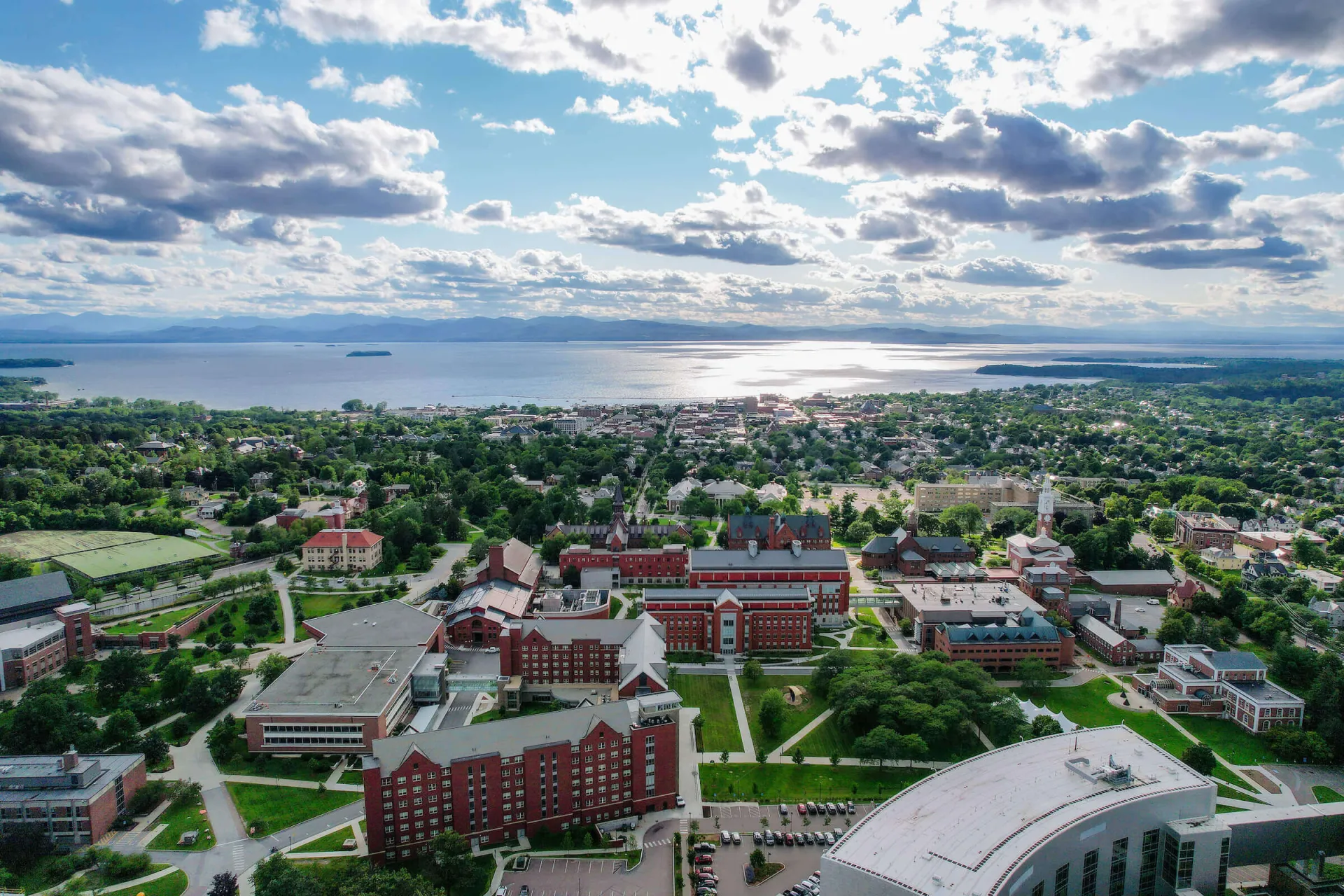
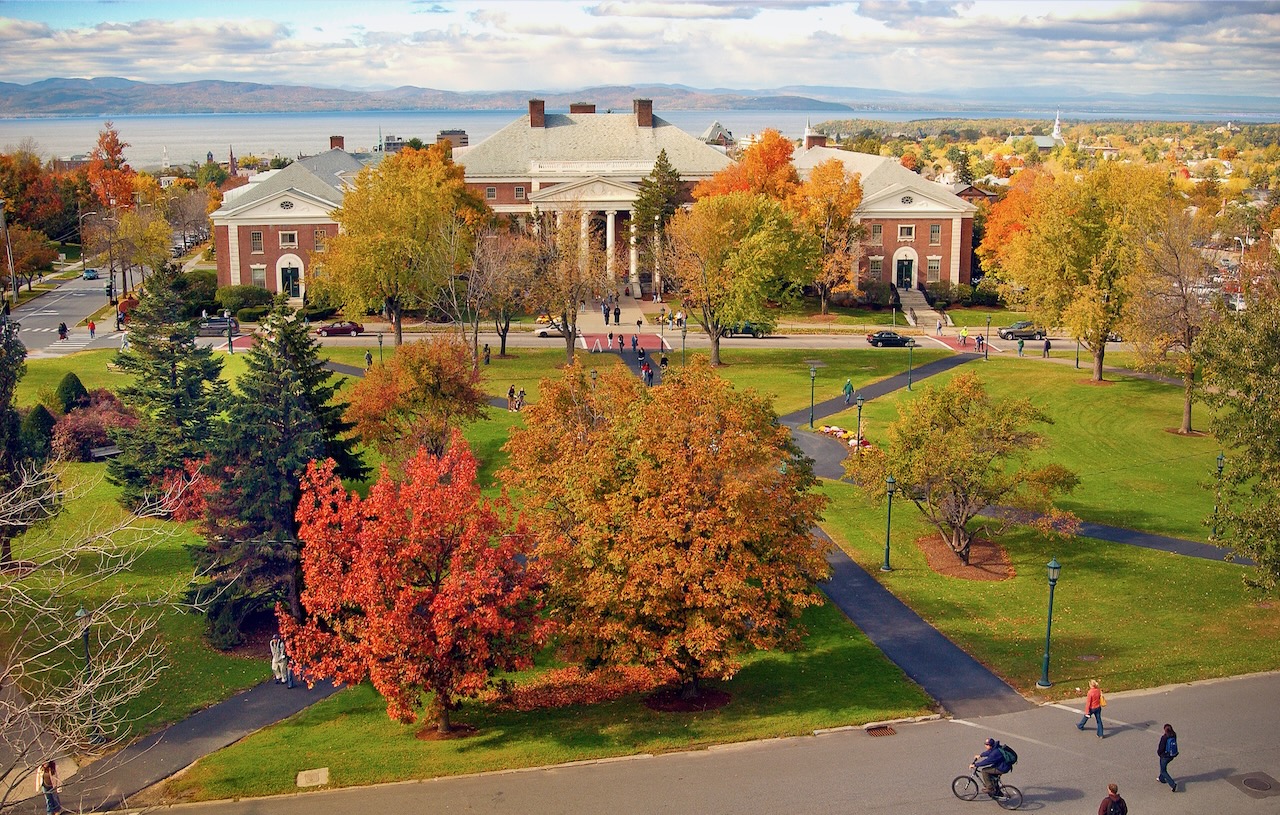
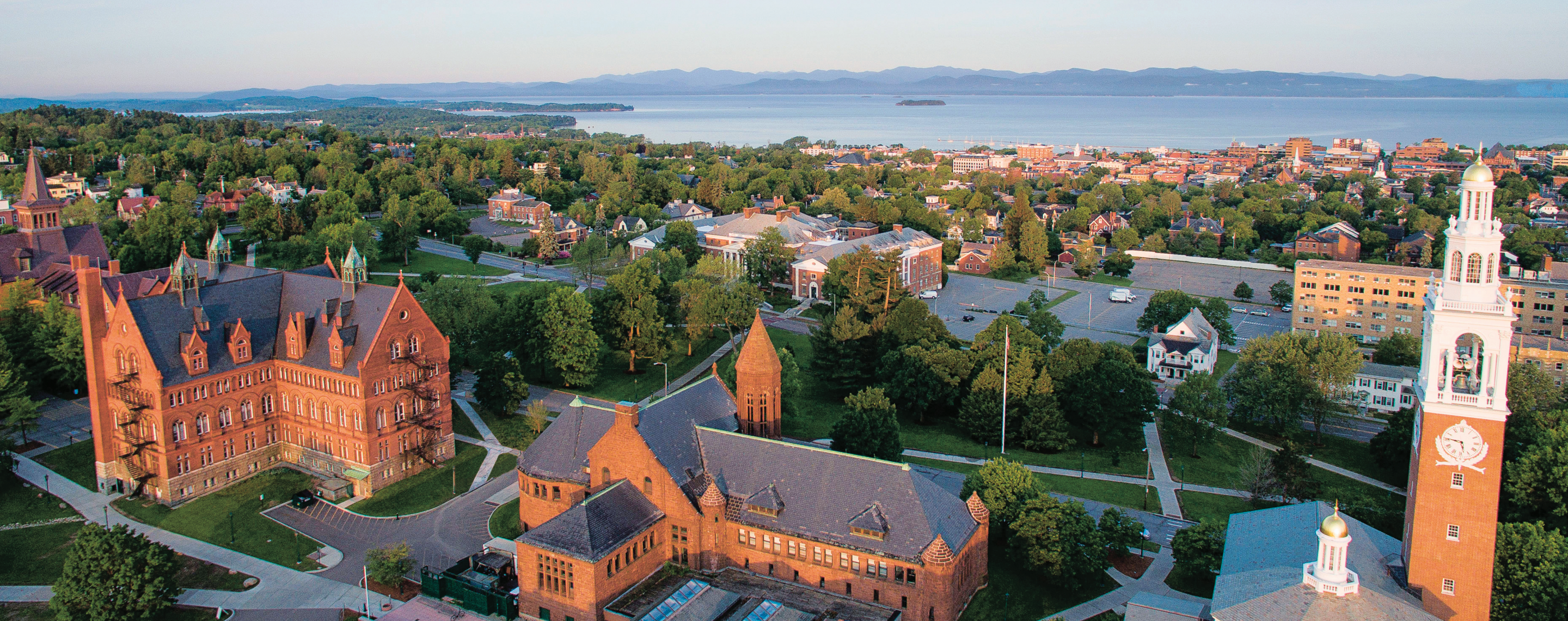
The University of Vermont is a public research university in Burlington that blends the academic heft of a flagship state school with the crunchy, outdoorsy ethos of its Green Mountain home. It's a place where you can study environmental science with field access to Lake Champlain and the Adirondacks, then join a club dedicated to maple syrup or backcountry skiing. While its admissions are becoming more selective, UVM retains a reputation for a collaborative, engaged student body drawn to its strong programs in the life sciences, engineering, and agriculture.
Admission requirements
Test-optional — scores considered if submitted
Required
High school transcript
Grade point average
Letters of recommendation
College-prep program
TOEFL (non-native English)
Considered (not required)
Class rank
Test scores (SAT/ACT)
Source: IPEDS Admissions survey (2022) via Urban Institute. Covers formal factors only — it does not reflect essays, extracurriculars, or other holistic criteria.
More details
Undergrad enrollment
11,743
In-state tuition
$19,058
Out-of-state tuition
$45,502
Graduation Rate
79%
Median Earnings (10yr)
$62,472
Percentage Receiving Aid
49.38%
Regular Decision Deadline
January 15
Average Financial Aid Package
$31,016
Outcomes & value
Outcomes & value
Median earnings (10 yr)
$62,472
Value (earnings ÷ net price)
3.2×
Median debt at graduation
$20,951
Graduation rate
79%
First-year retention
89%
Reducing loan balance (3 yr)
81%
Pell (lower-income) share
13%
First-gen share (among federal-aid recipients)
12%
Top-earning majors
Median earnings by field of study (highest credential), ~2 years after completion.
Electrical, Electronics, and Communications Engineering$72,325
Registered Nursing, Nursing Administration, Nursing Research and Clinical Nursing$61,875
Clinical/Medical Laboratory Science/Research and Allied Professions$57,770
Computer Science$56,641
Mechanical Engineering$55,770
Civil Engineering
Applicants here also applied to
The schools that most often appear alongside Vermont on applicants’ lists, from our self-reported outcomes corpus.
Co-application frequency from self-reported results — directional peer discovery, not a recommendation.
Campus & location
Campus safety
On-campus violent crimes (2024)
13
Per 1,000 students
0.93
On-campus criminal offenses classed as violent (murder/non-negligent manslaughter, rape, robbery, aggravated assault) for the most recent reported year. Source: U.S. Dept. of Education Campus Safety and Security (Clery Act). Counts reflect what’s reported to the school, and urban campuses often report more partly due to non-student incidents nearby — read alongside campus size and setting, not as a standalone safety verdict.
Climate
Pleasant days / yr
87
Summer high
78°F
Winter low
18°F
Annual rain
46.2"
Annual snow
52.6"
Natural-hazard risk
Relatively Low
Pleasant days counts days per year with a mean temperature of 55–75°F, a high at or below 90°F, a low at or above 45°F, and little precipitation — a transparent comfort measure, not a weighting we invented. Computed from Open-Meteo ERA5 daily history (2019–2023). Natural-hazard risk is the county’s composite rating from the FEMA National Risk Index.
Deep dive — research, future-scholar output & economic mobility▾
Research output
Institutional h-index
664
Scholarly works
64,601
Institutional research volume and impact from OpenAlex. The h-index reflects large research universities and will be low for teaching-focused liberal-arts colleges — not a measure of undergraduate quality.
Quick answers
What is the acceptance rate at University of Vermont?
University of Vermont's acceptance rate is approximately 65% (Burlington, VT), based on the most recent figures we compiled from public and primary sources.
What SAT score do you need for University of Vermont?
Admitted students at University of Vermont typically score 1290–1440 on the SAT (the middle-50% range). Scores outside this band are still admitted, especially with strong applications.
How much does University of Vermont cost?
At University of Vermont, the average net price (after aid) is about $19,343 per year. Actual cost varies with financial aid and residency.
How many undergraduates attend University of Vermont?
University of Vermont enrolls approximately 11,743 undergraduate students.
Where is University of Vermont located?
University of Vermont is located in Burlington, VT.
Admissions
UVM's admissions landscape is one of increasing selectivity, with the university recently reporting its most selective admission rate in at least 30 years. For the class entering in 2025, the was 59%, though the canonical figure for our profile is 65%. The university is , meaning students are not required to submit SAT or ACT scores. For those who do submit, the middle 50% SAT range is 1290–1440, and the ACT range is 30–32. Academic achievement in the admitted pool is high, with the class of 2027 marking a 30-year record high. The university offers an Early Decision (ED) plan, and data suggests a significant advantage for ED applicants; one source reports an ED acceptance rate of 93.7%, notably higher than the overall rate. The regular decision application deadline is January 15. In evaluating applicants, the university considers a range of academic and non-academic factors, though the specific weight of demonstrated interest is not detailed in the provided snippets.
Earnings = median of students working ~10 years after entry; debt = median of graduates. Value divides 10-yr earnings by one year’s net price — read it as earnings per dollar of annual cost, not a full lifetime ROI; it favors lower-cost schools. Source: U.S. Dept. of Education College Scorecard. Figures lag ~2 years and reflect all students, not your intended major.
$49,827
Mathematics$48,849
Environmental/Environmental Health Engineering$48,041
Source: U.S. Dept. of Education College Scorecard (field-of-study earnings). Figures cover graduates who received federal aid and lag ~2 years; not all programs report data.
UVM offers more than 100 undergraduate majors through a close-knit community of scholars, positioning itself as a comprehensive public research university. The curriculum is designed to be flexible, with options for major/minor combinations, double majors, and individually designed majors. Certain programs have developed particularly strong reputations. Student and external assessments highlight UVM as "pretty good for engineering, life sciences, and social sciences" and "really good for ecology and agriculture." Popular majors include Psychology (8% of degrees), Engineering (7%), Education (5%), and Visual and Performing Arts (4%). The academic experience is described as an "exceptional academic experience centered on student success," with a "wide variety of courses that are all highly regarded." The university has also been recognized for value, ranked in the top 100 on U.S. News & World Report's 2025 Best Value list.
Life at UVM is defined by an active, inclusive campus culture set against the backdrop of Burlington and Lake Champlain. The Department of Student Life fosters an "inclusive culture of student leadership development, community involvement, and programming." Students describe a "great culture" that is "accepting of others," with many ways to engage and build community. The campus offers a vibrant array of student organizations, outdoor adventures, academic resources, and dining options. For students not interested in the party scene, there are other avenues for social connection. The university promotes a balance, acknowledging the presence of a social scene while emphasizing the breadth of alternative activities. The overall vibe is one of a cohesive community where students can find their niche, whether through the Student Government Association, involvement in the Dudley H. Davis Center, or exploring the natural surroundings that make Vermont unique.
UVM demonstrates strong post-graduation outcomes, anchored by a solid graduation rate. The canonical graduation rate is 79%, which places it in the top 15% of institutions nationally. Historically, UVM's four-year graduation rate has been a point of pride, noted as being near the top for public universities. For the undergraduate Class of 2024, career outcomes were positive. The median salary for employed graduates was $50,259. A high percentage of employed graduates reported satisfaction with their position (92%) and indicated their work was related to their long-term career goals (87%). These figures reflect a successful transition from the university's academic programs into the workforce, with graduates earning a living wage and finding relevance in their early careers.
The average for a UVM education after aid and scholarships is $19,343. The university provides tools like a Net Price Calculator to help families estimate their individual cost, which accounts for tuition, fees, and estimated scholarship eligibility. Financial aid is a critical component, with 49.38% of students receiving financial aid and the average aid package totaling $31,016. Aid comes in various forms, including grants, scholarships, and loans. The university offers a Vermont Grant for state residents who demonstrate financial need. For federal loan options, the Direct PLUS Loan is available to graduate/medical students and parents of undergraduates, but it does not have a financial need requirement. The provided sources do not detail a comprehensive no-loan policy or a commitment to meet full demonstrated need for all students, though specific programs like the STEM Scholars program commit to meeting the full demonstrated financial need for participants.
UVM carves out a distinctive identity by being a public research university that fully embraces its Vermont setting. It's not just located in a beautiful place; the environment is integrated into its academic soul and campus culture. This is evident in its nationally recognized strength in ecology, agriculture, and environmental sciences—fields where the surrounding lakes, forests, and farms become living laboratories. Beyond academics, the university cultivates a specific vibe: progressive, outdoorsy, and community-oriented. Students who thrive here are often those seeking a collaborative rather than cutthroat academic atmosphere, paired with easy access to hiking, skiing, and the quirky, vibrant city of Burlington. While offering the breadth and resources of a flagship state university, UVM manages to feel more like a cohesive college town, attracting students who want a substantive education without sacrificing quality of life or their connection to the natural world.
University of Vermont seal · sourceAbout UVM | The University of Vermont | University of... · source6 Things to do When Visiting UVM for the Full College Experience - UVM Professional and Continuing Education · sourceApply to University of Vermont · source