Admit rate has ranged 54%–76% over the last 3 years — notably volatile. Source: IPEDS via Urban Institute.
Acceptance & SAT from Common Data Set / IPEDS; net price, earnings & graduation from the U.S. Dept. of Education College Scorecard. Figures lag ~1–2 years — verify with the school.
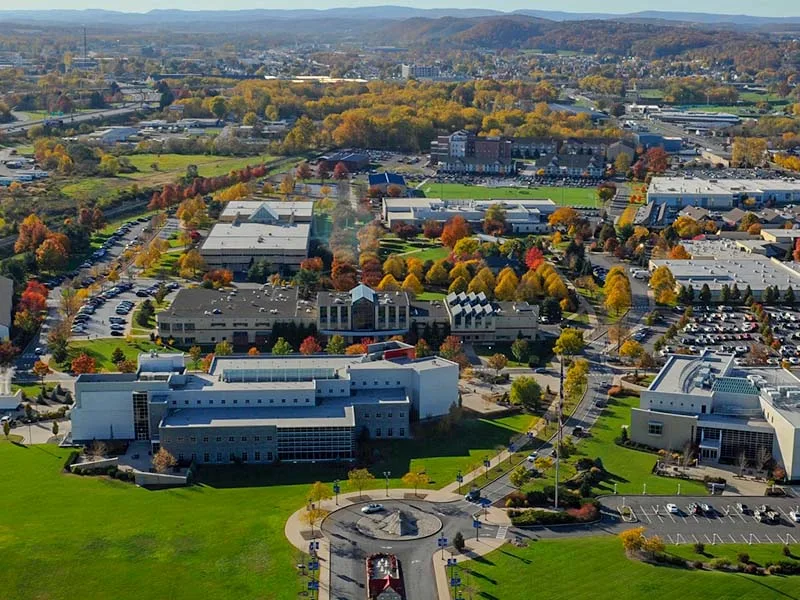
Penn State University Park is a sprawling, spirited public university where football Saturdays and the THON dance marathon define campus culture as much as its powerhouse business and engineering programs. With a 60% acceptance rate and a student body of over 42,000, it’s a place where ambition meets Big Ten school spirit—though its middling graduation rates and high net price give some pause.
Admission requirements
Test-optional — scores considered if submitted
Required
High school transcript
Grade point average
TOEFL (non-native English)
Considered (not required)
Test scores (SAT/ACT)
College-prep program
Source: IPEDS Admissions survey (2022) via Urban Institute. Covers formal factors only — it does not reflect essays, extracurriculars, or other holistic criteria.
More details
Undergrad enrollment
42,284
In-state tuition
$20,644
Out-of-state tuition
$41,790
Most Popular Majors
Business, Engineering, Psychology
Median Early Earnings
$36,427
Student-Faculty Ratio
15:1
6-Year Graduation Rate
86%
Outcomes & value
Outcomes & value
Median earnings (10 yr)
$63,435
Value (earnings ÷ net price)
1.9×
Median debt at graduation
$25,000
Graduation rate
86%
First-year retention
93%
Reducing loan balance (3 yr)
68%
Pell (lower-income) share
14%
First-gen share (among federal-aid recipients)
29%
Top-earning majors
Median earnings by field of study (highest credential), ~2 years after completion.
Computer and Information Sciences, General$78,244
Polymer/Plastics Engineering$75,706
Engineering Science$73,215
Chemical Engineering$73,145
Industrial Engineering$71,286
Computer Engineering$71,234
Applicants here also applied to
The schools that most often appear alongside Penn State on applicants’ lists, from our self-reported outcomes corpus.
On-campus criminal offenses classed as violent (murder/non-negligent manslaughter, rape, robbery, aggravated assault) for the most recent reported year. Source: U.S. Dept. of Education Campus Safety and Security (Clery Act). Counts reflect what’s reported to the school, and urban campuses often report more partly due to non-student incidents nearby — read alongside campus size and setting, not as a standalone safety verdict.
Climate
Pleasant days / yr
89
Summer high
82°F
Winter low
24°F
Annual rain
40.7"
Annual snow
28.7"
Natural-hazard risk
Relatively Low
Pleasant days counts days per year with a mean temperature of 55–75°F, a high at or below 90°F, a low at or above 45°F, and little precipitation — a transparent comfort measure, not a weighting we invented. Computed from Open-Meteo ERA5 daily history (2019–2023). Natural-hazard risk is the county’s composite rating from the FEMA National Risk Index.
Quick answers
What is the acceptance rate at Pennsylvania State University-Main Campus?
Pennsylvania State University-Main Campus's acceptance rate is approximately 61% (University Park, PA), based on the most recent figures we compiled from public and primary sources.
What SAT score do you need for Pennsylvania State University-Main Campus?
Admitted students at Pennsylvania State University-Main Campus typically score 1240–1420 on the SAT (the middle-50% range). Scores outside this band are still admitted, especially with strong applications.
How much does Pennsylvania State University-Main Campus cost?
At Pennsylvania State University-Main Campus, the average net price (after aid) is about $32,875 per year. Actual cost varies with financial aid and residency.
How many undergraduates attend Pennsylvania State University-Main Campus?
Pennsylvania State University-Main Campus enrolls approximately 42,284 undergraduate students.
Where is Pennsylvania State University-Main Campus located?
Pennsylvania State University-Main Campus is located in University Park, PA.
Admissions
Penn State’s hovers around 60%, making it moderately selective—though rumors swirl about a potential drop to single digits for certain cohorts ([10]). The middle 50% of admitted students boast SAT scores between 1250-1430, ACT scores of 25-31, and weighted GPAs averaging 3.84 ([2], [7]). policies remain through 2025, but submitted scores skew toward the upper quartile ([5]). Notably, only 35% of applicants ranked in the top 10% of their high school class ([8]), suggesting Penn State values breadth over elitism.
With 275+ majors—from linguistics to supply chain management—Penn State operates like a "public Ivy" for pragmatists ([13], [14]). Business and engineering dominate (30% of degrees), but niche strengths include meteorology, agricultural sciences, and a surprisingly robust theater program ([15], [16]). The Princeton Review praises its "highly regarded programs across a wide range of academic colleges" ([17]), though students note stark differences in rigor between flagship departments and less-resourced majors. First-year retention rates lag peers at 75% ([30]), hinting at academic culture shocks for some.
Earnings = median of students working ~10 years after entry; debt = median of graduates. Value divides 10-yr earnings by one year’s net price — read it as earnings per dollar of annual cost, not a full lifetime ROI; it favors lower-cost schools. Source: U.S. Dept. of Education College Scorecard. Figures lag ~2 years and reflect all students, not your intended major.
Biomedical/Medical Engineering
$69,817
Petroleum Engineering$69,535
Source: U.S. Dept. of Education College Scorecard (field-of-study earnings). Figures cover graduates who received federal aid and lag ~2 years; not all programs report data.
Life here revolves around two things: football and THON, the 46-hour dance marathon that’s raised $190M for pediatric cancer ([22]). With 40,000+ students, the campus feels like a "small city" ([23])—35% live on campus, while 65% spill into State College’s apartment complexes ([24]). Greek life claims 15% of undergrads, but the real social glue is the 1,000+ clubs, from the Creamery ice cream appreciation society to top-ranked debate teams ([19]). Reddit threads praise the "meeting expectations" quality of life ([20]), though the sheer size means anonymity is easy unless you hustle to find your niche.
Six-year graduation rates land at 86%—respectable for a public university but trailing Big Ten peers like Michigan and Wisconsin ([29]). Median early-career earnings hit $36,427 ([28]), though this masks stark divides: engineering grads outearn liberal arts peers by 40%. The business school reports a 77% first-time CPA pass rate ([25]), while critiques note Penn State’s "second-to-last" Big Ten ranking in ROI ([27]). The alumni network (750,000+ strong) opens doors, but students without STEM or business degrees may need to hustle harder.
The $32,638 net price stings for out-of-state students ([32]), with only 40% receiving aid averaging $10,491 ([33]). Honors college admits might snag $5,000 merit scholarships, but most middle-class families report minimal assistance ([34]). Tuition calculators warn that "the estimate does not represent a final determination" ([35]), a bureaucratic hedge for a school that spends heavily on facilities (see: the $700M Beaver Stadium renovation) but less on . For Pennsylvania residents, it’s a bargain; for others, it’s Big Ten pricing without Big Ten prestige.
Penn State is the quintessential "big state school"—for better and worse. Its strengths (business, engineering, school spirit) are monumental; its weaknesses (cookie-cutter gen eds, financial aid gaps) are typical of large publics. What sets it apart is the cult-like devotion of its alumni and the sheer scale of its traditions—where else does a dance marathon draw 16,500 volunteers? ([22]). It’s a place where you can join a top-10 supply chain management program by day and scream yourself hoarse at White Out games by night—if you can stomach the price tag.
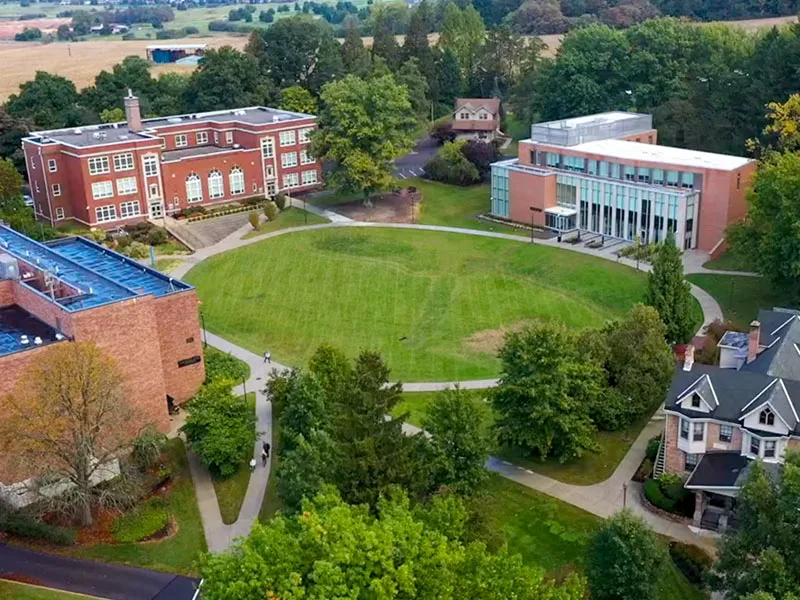
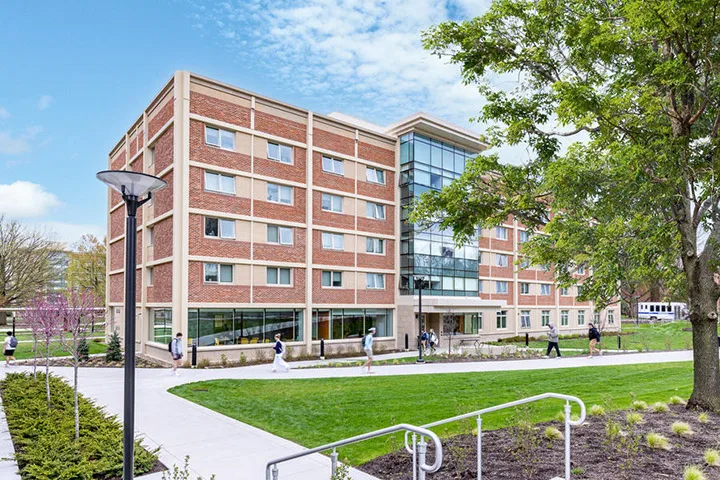
Pennsylvania State University-Main Campus logo · sourcePenn State Campuses | Penn State Locations · sourcePenn State Campuses | Penn State Locations · sourcePenn State Campus · source