Admit rate has ranged 73%–79% over the last 5 years. Source: IPEDS via Urban Institute.
Acceptance & SAT from Common Data Set / IPEDS; net price, earnings & graduation from the U.S. Dept. of Education College Scorecard. Figures lag ~1–2 years — verify with the school.
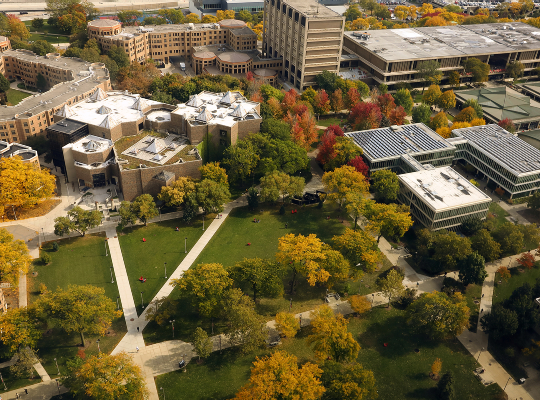
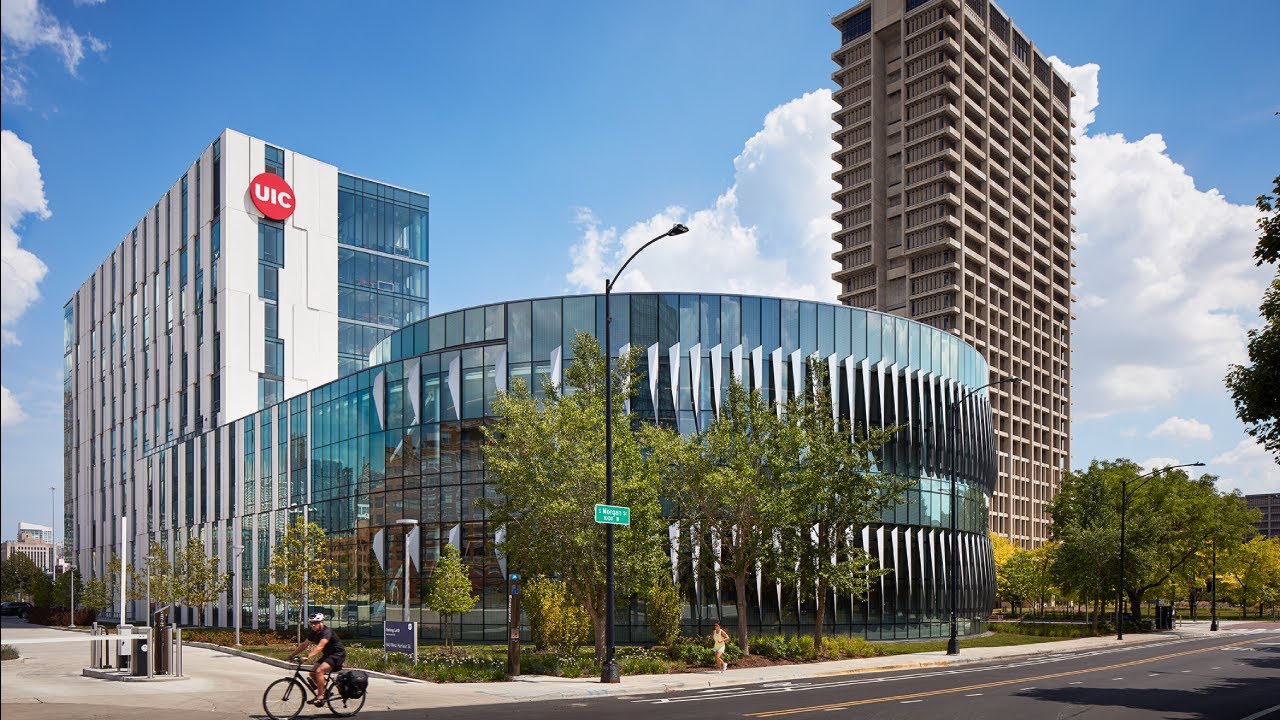
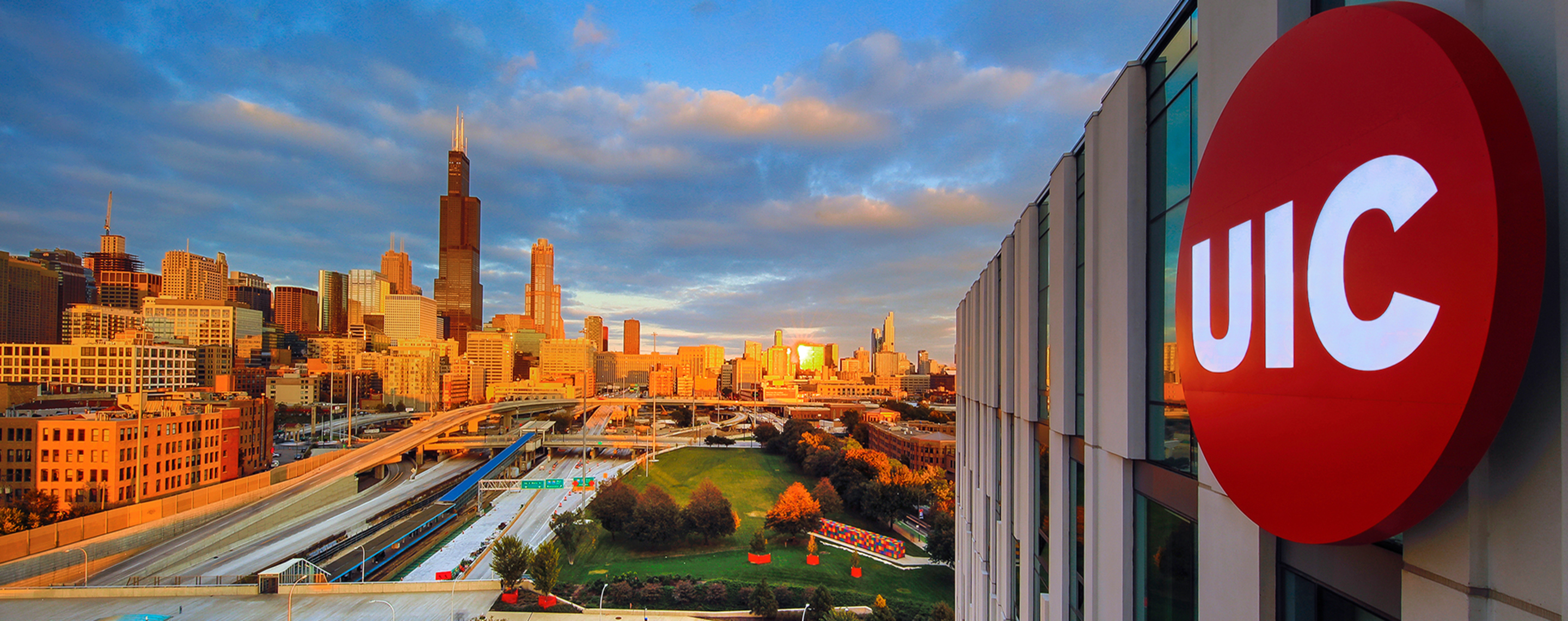
The University of Illinois Chicago isn't a cloistered campus; it's a sprawling, pragmatic engine of social mobility dropped into the heart of a global city. With an acceptance rate that reflects its public mission, UIC serves a predominantly commuter student body a rigorous, career-focused education, where the surrounding neighborhoods of Pilsen, Little Italy, and Greektown are as much a part of the curriculum as the lecture halls. It's a place where the value proposition is stark and clear: a relatively low net price for a degree that delivers strong median earnings, especially for first-generation and low-income students.
Admission requirements
Test-optional — scores considered if submitted
Required
High school transcript
Grade point average
Class rank
College-prep program
TOEFL (non-native English)
Considered (not required)
Test scores (SAT/ACT)
Source: IPEDS Admissions survey (2022) via Urban Institute. Covers formal factors only — it does not reflect essays, extracurriculars, or other holistic criteria.
More details
Undergrad enrollment
22,170
In-state tuition
$14,338
Out-of-state tuition
$29,884
Top Majors
Business, Health Professions
Graduation Rate
62%
On-Campus Residents
~20%
Median Earnings (10yr)
$68,740
Financial Aid Distributed
Nearly $200M
First-Destination Success Rate
91%
Outcomes & value
Outcomes & value
Median earnings (10 yr)
$68,740
Value (earnings ÷ net price)
6.3×
Median debt at graduation
$16,704
Graduation rate
62%
First-year retention
80%
Reducing loan balance (3 yr)
69%
Pell (lower-income) share
49%
First-gen share (among federal-aid recipients)
44%
Top-earning majors
Median earnings by field of study (highest credential), ~2 years after completion.
Electrical, Electronics, and Communications Engineering$70,610
Computer Science$68,153
Registered Nursing, Nursing Administration, Nursing Research and Clinical Nursing$66,394
Computer Engineering$64,493
Mechanical Engineering$63,005
Civil Engineering
Applicants here also applied to
The schools that most often appear alongside University of Illinois Chicago on applicants’ lists, from our self-reported outcomes corpus.
On-campus criminal offenses classed as violent (murder/non-negligent manslaughter, rape, robbery, aggravated assault) for the most recent reported year. Source: U.S. Dept. of Education Campus Safety and Security (Clery Act). Counts reflect what’s reported to the school, and urban campuses often report more partly due to non-student incidents nearby — read alongside campus size and setting, not as a standalone safety verdict.
Climate
Pleasant days / yr
88
Summer high
79°F
Winter low
23°F
Annual rain
47.2"
Annual snow
30.1"
Natural-hazard risk
Very High
Pleasant days counts days per year with a mean temperature of 55–75°F, a high at or below 90°F, a low at or above 45°F, and little precipitation — a transparent comfort measure, not a weighting we invented. Computed from Open-Meteo ERA5 daily history (2019–2023). Natural-hazard risk is the county’s composite rating from the FEMA National Risk Index.
Deep dive — research, future-scholar output & economic mobility▾
Research output
Institutional h-index
963
Scholarly works
198,178
Institutional research volume and impact from OpenAlex. The h-index reflects large research universities and will be low for teaching-focused liberal-arts colleges — not a measure of undergraduate quality.
Quick answers
What is the acceptance rate at University of Illinois Chicago?
University of Illinois Chicago's acceptance rate is approximately 77% (Chicago, IL), based on the most recent figures we compiled from public and primary sources.
What SAT score do you need for University of Illinois Chicago?
Admitted students at University of Illinois Chicago typically score 1130–1350 on the SAT (the middle-50% range). Scores outside this band are still admitted, especially with strong applications.
How much does University of Illinois Chicago cost?
At University of Illinois Chicago, the average net price (after aid) is about $10,974 per year. Actual cost varies with financial aid and residency.
How many undergraduates attend University of Illinois Chicago?
University of Illinois Chicago enrolls approximately 22,170 undergraduate students.
Where is University of Illinois Chicago located?
University of Illinois Chicago is located in Chicago, IL.
Admissions
UIC's admissions process is characterized by its accessibility, with a high that aligns with its role as a public research university serving the Chicago area and beyond. The process is straightforward and test-flexible, focusing on core academic preparation.
Selectivity & Profile: The university admits a significant majority of its applicants, with an early acceptance rate notably higher than its regular decision rate. The admitted student profile shows solid academic preparation, with a middle 50% SAT range and a GPA distribution skewed toward the upper end of the scale.
Factors Considered: While the specifics for UIC are not provided in the snippets, general first-year requirements emphasize the rigor of secondary school record, GPA, and standardized test scores (though tests are not always required).
Yield: The percentage of admitted students who choose to enroll is described as medium, which is typical for an urban commuter school with many local options.
Key Notes: There is no mention of Early Decision programs at UIC in the provided sources, and the concept of 'demonstrated interest' is discussed only in the context of the University of Chicago, not UIC. The admissions vibe is practical, not performative.
Earnings = median of students working ~10 years after entry; debt = median of graduates. Value divides 10-yr earnings by one year’s net price — read it as earnings per dollar of annual cost, not a full lifetime ROI; it favors lower-cost schools. Source: U.S. Dept. of Education College Scorecard. Figures lag ~2 years and reflect all students, not your intended major.
$61,839
Chemical Engineering$60,714
Industrial Engineering$59,576
Source: U.S. Dept. of Education College Scorecard (field-of-study earnings). Figures cover graduates who received federal aid and lag ~2 years; not all programs report data.
UIC's academic identity is defined by its breadth as a major research university and its depth in specific, high-demand professional fields. The curriculum is designed to be rigorous and applied, with a strong focus on preparing students for careers or advanced study.
Popular Majors: The most popular majors cluster in pre-professional tracks. Business, Management, Marketing, and Related Support Services lead the way, followed closely by Health Professions and Related Programs.
Program Strengths: Beyond the popular majors, UIC earns national recognition in several key areas. Undergraduate programs in psychology, computer science, engineering, economics, and business are ranked among the top 100 nationally.
Academic Culture: Student and review descriptions point to a "rigorous and rewarding" experience with dedicated, supportive professors. The College of Liberal Arts and Sciences provides the core undergraduate education, requiring a minimum of advanced-level coursework for graduation. The arts and humanities curriculum is noted for developing critical-thinking skills and a comprehensive worldview.
Life at UIC is unmistakably urban and self-directed. The campus is a hub within the city grid, not an escape from it, which shapes a commuter-centric culture where students often "come, conduct their business, and" leave.
Campus Vibe: With only about 20% of students living on campus, UIC lacks the pervasive 24/7 residential feel of a traditional college. The energy is more transactional and independent. However, the university provides dedicated hubs for student life where one can "relax, study, eat and hang out," and the Center for Student Involvement actively works to "build a foundation for holistic development" through programming.
Location & Setting: This is arguably UIC's greatest asset. The university is "situated among many culturally rich neighborhoods," including Greektown, the South Loop, West Loop, Pilsen, Little Italy, Chinatown, and the trendy University Village. The city of Chicago serves as an extended campus for internships, culture, and entertainment.
Clubs & Activities: Despite the commuter dynamic, student life is described as diverse with "a variety of clubs everything from academic to athletic to cultural." The @uiclife Instagram account functions as a central channel for campus events, free food, career support, and wellness resources.
UIC's outcomes story is one of strong return on investment, particularly when viewed through the lens of social mobility. The university successfully propels a large number of students, many from modest backgrounds, into solid careers and further education.
Graduation Rates: The six-year graduation rate for first-time, full-time students is tracked by the university.
Post-Graduation Success: Data for bachelor's degree recipients shows a high rate of successful outcomes shortly after graduation. A recent report indicated that 91% of graduates secured a "First Destination," with 27% employed and a significant 65% continuing their education (e.g., graduate or professional school).
Earnings: The median earnings for graduates ten years after entry is a key metric of long-term ROI.
Important Distinction: The provided sources contain conflicting graduation rate figures from different external sources; the canonical figure provided overrides these.
UIC's financial proposition is central to its mission. It combines a relatively low published with significant institutional aid, making a four-year degree from a major research university accessible to a broad economic spectrum.
Financial Aid Volume: The university distributes substantial aid, with undergraduates receiving nearly $200 million in financial aid and scholarships annually.
Net Price: The average net price after grants and scholarships is a critical figure, consistently reported as being well below the national average for four-year institutions. A significant majority (74%) of full-time beginning undergraduates receive grant or scholarship aid.
Flagship Aid Initiative: For Illinois residents, UIC has announced a transformative program starting Fall 2025: students from families earning $75,000 or less per year may be eligible for $0 in tuition and fees. This "Illinois Commitment"-style program is a major part of the university's identity as an engine of opportunity.
Note: External sources cite varying net price figures; the canonical value provided overrides these.
UIC carves out a distinct and vital niche in the higher education landscape. It forgoes the curated, residential liberal arts experience in favor of something grittier and more directly consequential: an urban, pragmatic, and high-value education for the striver. Its standout features are not about exclusivity, but about impact.
1. The City as Campus: Unlike universities merely near a city, UIC is woven into Chicago's fabric. Its surrounding neighborhoods are diverse, vibrant, and provide real-world context for learning in fields from public health to urban planning to the arts. 2. An Engine of Social Mobility: This is UIC's core mission and its most celebrated achievement. U.S. News rates it among national leaders in social mobility. By combining a strong academic reputation in fields like business, health, and engineering with a low and a forthcoming free-tuition promise for lower-income Illinoisans, it delivers life-changing ROI for students who are often the first in their families to attend college. 3. A Commuter's Reality: The student experience is defined by independence. The low on-campus residency rate creates a culture that is less about curated campus traditions and more about self-motivated pursuit of a degree and career. This isn't for everyone, but for focused, career-oriented students, it eliminates distraction and fosters professional maturity. 4. Strength in Key Fields: It doesn't try to be everything to everyone. Its national rankings and most popular majors reveal a focused strength in the high-wage, high-demand sectors of healthcare, business, engineering, and computer science. You come to UIC to get a job or into grad school, and the outcomes data shows it works.
University of Illinois Chicago seal · sourceVisit UIC Campus · sourceUIC Campus Tour | University of Illinois Chicago · sourceUniversity of Illinois Chicago - University of Illinois System · source
_(14592057920).jpg?width=1600)