Admit rate has ranged 75%–83% over the last 5 years. Source: IPEDS via Urban Institute.
Acceptance & SAT from Common Data Set / IPEDS; net price, earnings & graduation from the U.S. Dept. of Education College Scorecard. Figures lag ~1–2 years — verify with the school.
Drexel University is a Philadelphia powerhouse known for its relentless focus on real-world experience, epitomized by its signature co-op program. With a pragmatic, career-driven culture and an urban campus that blends into the city, Drexel attracts students who want to hit the ground running—evidenced by alumni earning $20K above peers from similar schools. The university’s 77% acceptance rate belies its rigor: students juggle intense academics with professional rotations, making downtime scarce but rewarding.
Admission requirements
Test-optional — scores considered if submitted
Required
High school transcript
Grade point average
Letters of recommendation
Demonstrated competencies
TOEFL (non-native English)
Considered (not required)
Class rank
Test scores (SAT/ACT)
College-prep program
Source: IPEDS Admissions survey (2022) via Urban Institute. Covers formal factors only — it does not reflect essays, extracurriculars, or other holistic criteria.
More details
Undergrad enrollment
13,233
In-state tuition
$62,412
Out-of-state tuition
$62,412
Out-of-State Students
46%
International Students
9%
Six-Year Graduation Rate
77%
Avg. Need-Based Aid Award
$40,401
First-Year Retention Rate
88%
Avg. Salary 1 Year Post-Grad
$63,417
Outcomes & value
Outcomes & value
Median earnings (10 yr)
$84,648
Value (earnings ÷ net price)
2.2×
Median debt at graduation
$25,325
Graduation rate
78%
First-year retention
90%
Reducing loan balance (3 yr)
77%
Pell (lower-income) share
27%
First-gen share (among federal-aid recipients)
29%
Top-earning majors
Median earnings by field of study (highest credential), ~2 years after completion.
Computer Science$75,330
Registered Nursing, Nursing Administration, Nursing Research and Clinical Nursing$73,199
Computer Engineering$71,798
Chemical Engineering$71,661
Information Science/Studies$70,829
Electrical, Electronics, and Communications Engineering
Applicants here also applied to
The schools that most often appear alongside Drexel University on applicants’ lists, from our self-reported outcomes corpus.
Co-application frequency from self-reported results — directional peer discovery, not a recommendation.
Campus & location
Campus safety
On-campus violent crimes (2024)
8
Per 1,000 students
0.38
On-campus criminal offenses classed as violent (murder/non-negligent manslaughter, rape, robbery, aggravated assault) for the most recent reported year. Source: U.S. Dept. of Education Campus Safety and Security (Clery Act). Counts reflect what’s reported to the school, and urban campuses often report more partly due to non-student incidents nearby — read alongside campus size and setting, not as a standalone safety verdict.
Climate
Pleasant days / yr
89
Summer high
85°F
Winter low
30°F
Annual rain
49.8"
Annual snow
12.8"
Natural-hazard risk
Very High
Pleasant days counts days per year with a mean temperature of 55–75°F, a high at or below 90°F, a low at or above 45°F, and little precipitation — a transparent comfort measure, not a weighting we invented. Computed from Open-Meteo ERA5 daily history (2019–2023). Natural-hazard risk is the county’s composite rating from the FEMA National Risk Index.
Deep dive — research, future-scholar output & economic mobility▾
Research output
Institutional h-index
759
Scholarly works
83,569
Institutional research volume and impact from OpenAlex. The h-index reflects large research universities and will be low for teaching-focused liberal-arts colleges — not a measure of undergraduate quality.
Quick answers
What is the acceptance rate at Drexel University?
Drexel University's acceptance rate is approximately 79% (Philadelphia, PA), based on the most recent figures we compiled from public and primary sources.
What SAT score do you need for Drexel University?
Admitted students at Drexel University typically score 1240–1440 on the SAT (the middle-50% range). Scores outside this band are still admitted, especially with strong applications.
How much does Drexel University cost?
At Drexel University, the average net price (after aid) is about $38,509 per year. Actual cost varies with financial aid and residency.
How many undergraduates attend Drexel University?
Drexel University enrolls approximately 13,233 undergraduate students.
Where is Drexel University located?
Drexel University is located in Philadelphia, PA.
Admissions
Drexel’s admissions process is moderately selective, with a 77.53% acceptance rate (BigFuture) and an average admitted student ACT range of 27–33. The university offers three admission plans: Early Decision, Early Action, and Regular Decision (Drexel Admissions). Notably, 63% of applicants are admitted (US News), and the first-year class size hovers around 1,918 students (Drexel Population Profile). since at least 2022, Drexel emphasizes , though middle 50% SAT scores for enrolled students range from 1230–1410 (CDS 2024-2025). The student body is geographically diverse, with 46% out-of-state and 9% international students (Peterson’s). Retention rates are strong at 88% (Drexel Population Profile).
Earnings = median of students working ~10 years after entry; debt = median of graduates. Value divides 10-yr earnings by one year’s net price — read it as earnings per dollar of annual cost, not a full lifetime ROI; it favors lower-cost schools. Source: U.S. Dept. of Education College Scorecard. Figures lag ~2 years and reflect all students, not your intended major.
$70,270
Construction Management$69,338
Mechanical Engineering$67,101
Source: U.S. Dept. of Education College Scorecard (field-of-study earnings). Figures cover graduates who received federal aid and lag ~2 years; not all programs report data.
Drexel’s academic identity is defined by its cooperative education (co-op) program, which integrates six-month professional rotations into the curriculum. The university is undergoing an Academic Transformation to streamline its offerings, but it still provides over 80 undergraduate majors, with notable strength in engineering, business, and health sciences (Drexel Undergrad Programs). Popular majors include Multi/Interdisciplinary Studies (5%) and Biological/Biomedical Sciences (5%) (US News Academics). The College of Arts and Sciences alone offers 40+ minors, spanning humanities to natural sciences (CoAS Programs). The Princeton Review highlights Drexel’s ‘dynamic curriculum’ that merges theory with hands-on experience, a hallmark of its career-focused ethos.
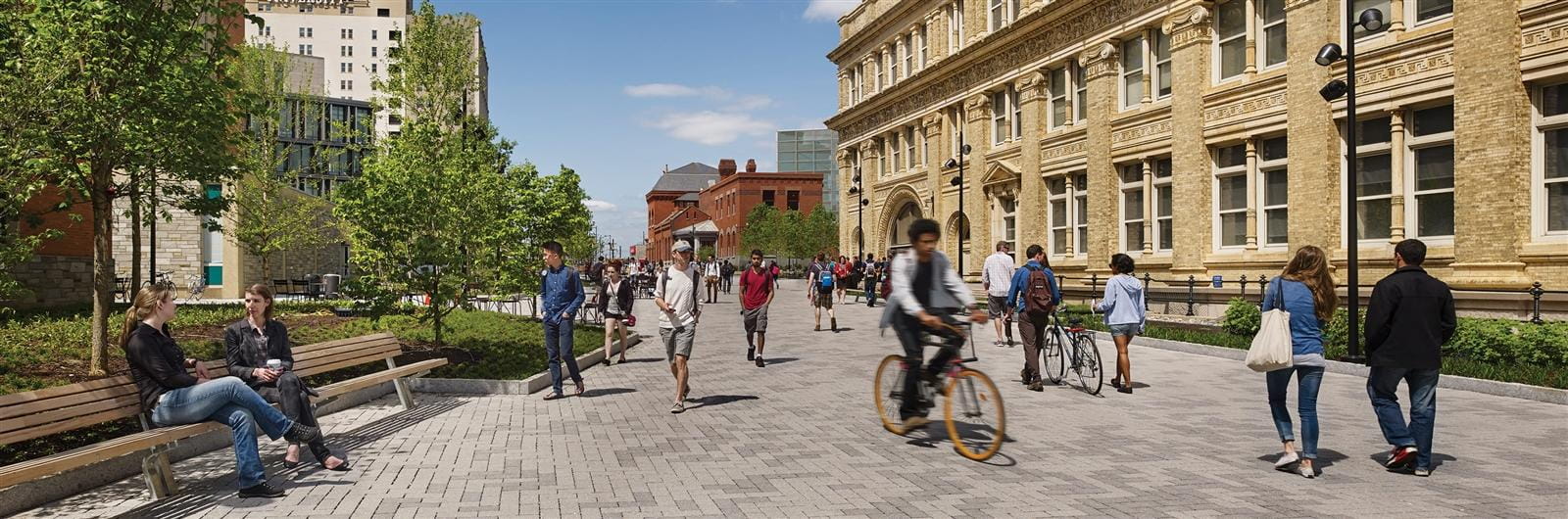
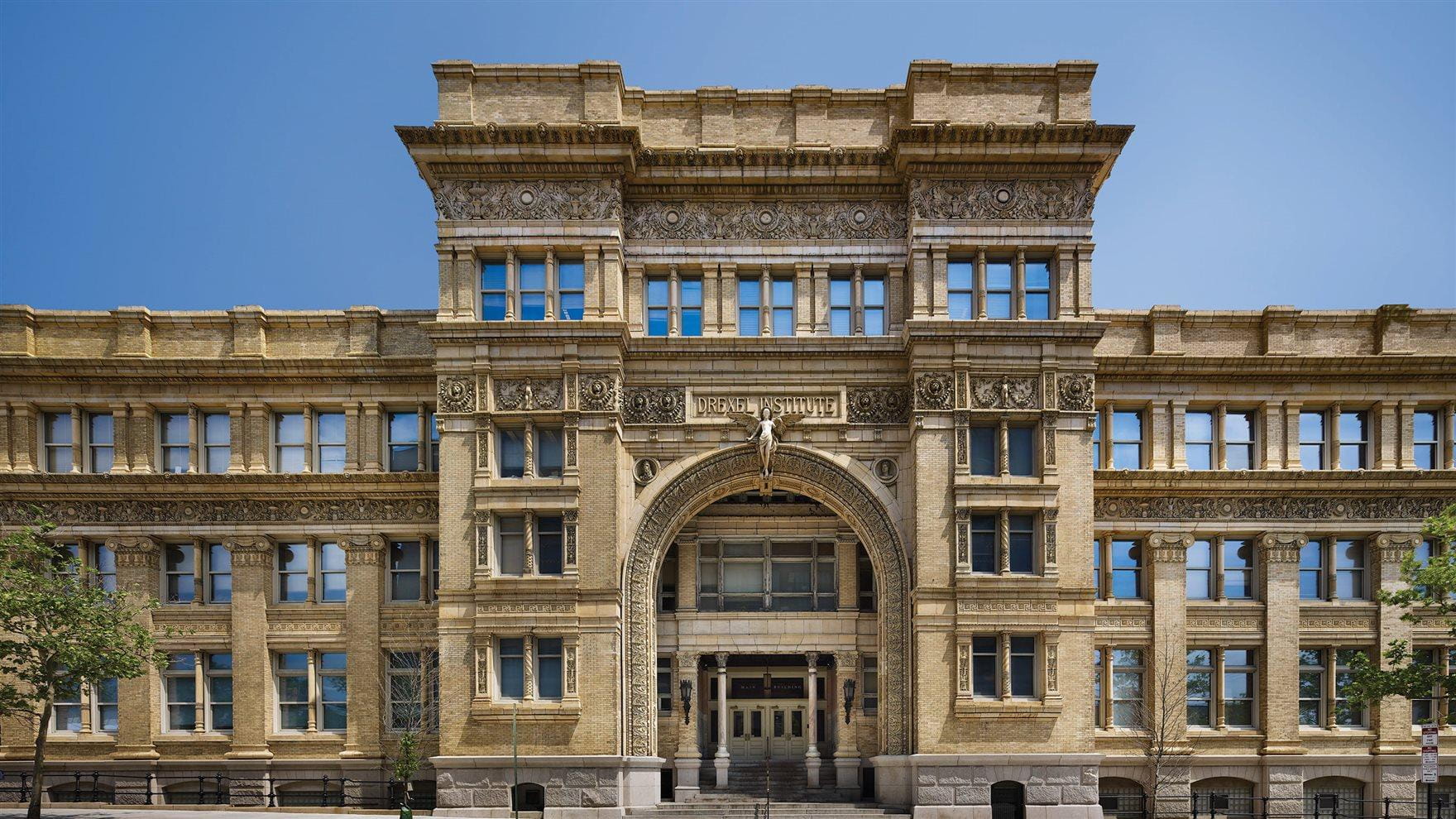
Life at Drexel is fast-paced and urban, with students balancing co-op rotations and academics. The campus vibe is more pragmatic than rah-rah, though Reddit users note ‘a decent amount of good house parties’ and active clubs (Reddit). The university fosters inclusivity through the Student Center for Inclusion and Culture (SCIC), which supports intercultural dialogue (Drexel Family Portal). Housing costs $11,232/year (Niche Campus Life), and the dorms are a mix of high-rises and historic Philly buildings. With Philadelphia as a backdrop, students tap into the city’s internships, food scene, and cultural offerings—Drexel’s official Facebook page calls campus life ‘vibrant and full of excitement’.
Drexel delivers on its promise of high earnings and strong career placement. Graduates earn 6% above the national average, with $63,417 average salary one year post-graduation (Drexel Outcomes, Twitter). A Brookings study found Drexel alumni out-earn peers by $20K annually (WSJ). The six-year graduation rate is 77% (Research.com), up from 69.4% in 2013 (Drexel Strategic Plan). The university ranks in the top 3% of U.S. schools for earnings a decade after graduation (Twitter), a testament to its co-op model’s ROI.
Drexel’s sticker price is steep at $64,212/year (US News), but 75% of first-years receive need-based aid, averaging $40,401 (US News Paying). The net price after aid is $42,342 (BigFuture Costs), with an average aid package of $28,345. The university encourages use of its Net Price Calculator for personalized estimates (Drexel NPC). Notably, co-op earnings can offset costs, though this isn’t quantified in official data.
Drexel’s co-op program is its crown jewel, offering students up to 18 months of paid work experience before graduation—a rarity in higher ed. The urban integration with Philadelphia means classrooms extend into the city’s labs, firms, and hospitals. While not as selective as Ivy peers, Drexel punches above its weight in ROI, with alumni earnings in the top 3% nationally. This is a school for doers, not dawdlers: the quarter system and co-op rotations demand hustle, but the payoff—a resume stacked with experience—is undeniable.